Your cart
Your cart is empty.
Get started with Buoy’s best-sellers.


| Term | What It Refers To |
| Acid reflux | The backward flow of stomach acid into the esophagus, caused by the lower esophageal sphincter (LES) opening when it shouldn't |
| Heartburn | The burning sensation in the chest that acid reflux causes, one of its most common symptoms |
| GERD | Chronic, frequent acid reflux that happens regularly enough to be diagnosed as a condition |
| Drink Type | Effect on Reflux |
| Water | Generally well tolerated, helps dilute stomach acid |
| Herbal teas (chamomile, ginger, fennel) | Often gentle, though ginger can be too strong for some people |
| Non-acidic fruit and vegetable juices (pear, cucumber, celery, carrot) | Usually easier to tolerate than citrus |
| Citrus juices (orange, grapefruit, lemonade) | Highly acidic, a common trigger |
| Carbonated drinks, including sparkling water | Can increase stomach pressure, pushing acid upward |
| Coffee and caffeinated tea | Caffeine can relax the LES (lower esophageal sphincter) and increase acid production |
| Alcohol | Relaxes the LES and increases stomach acid |
| Standard flavored sports and electrolyte drinks | Often contain citric acid or acidic fruit flavoring, a common trigger |
 View Clinical Study

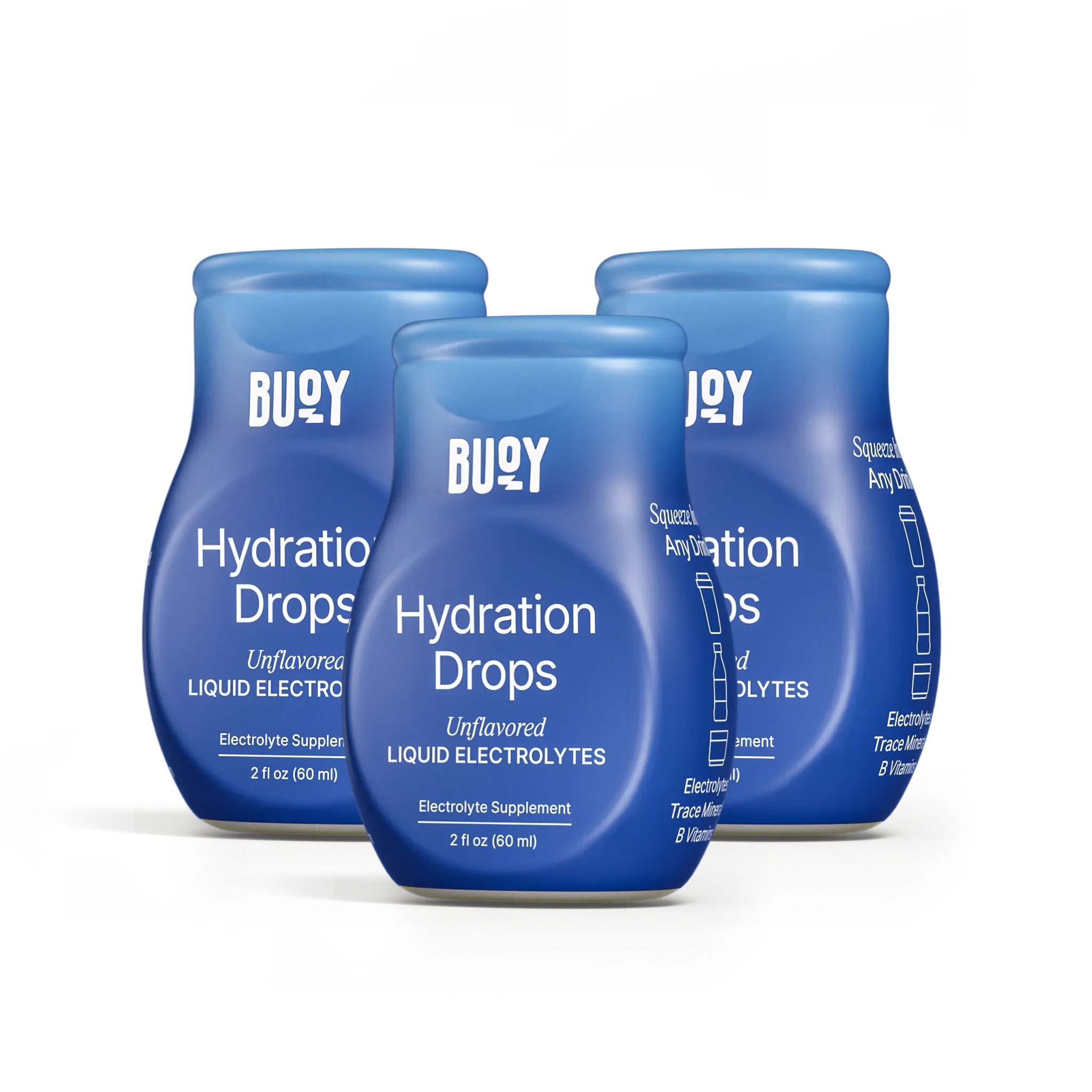
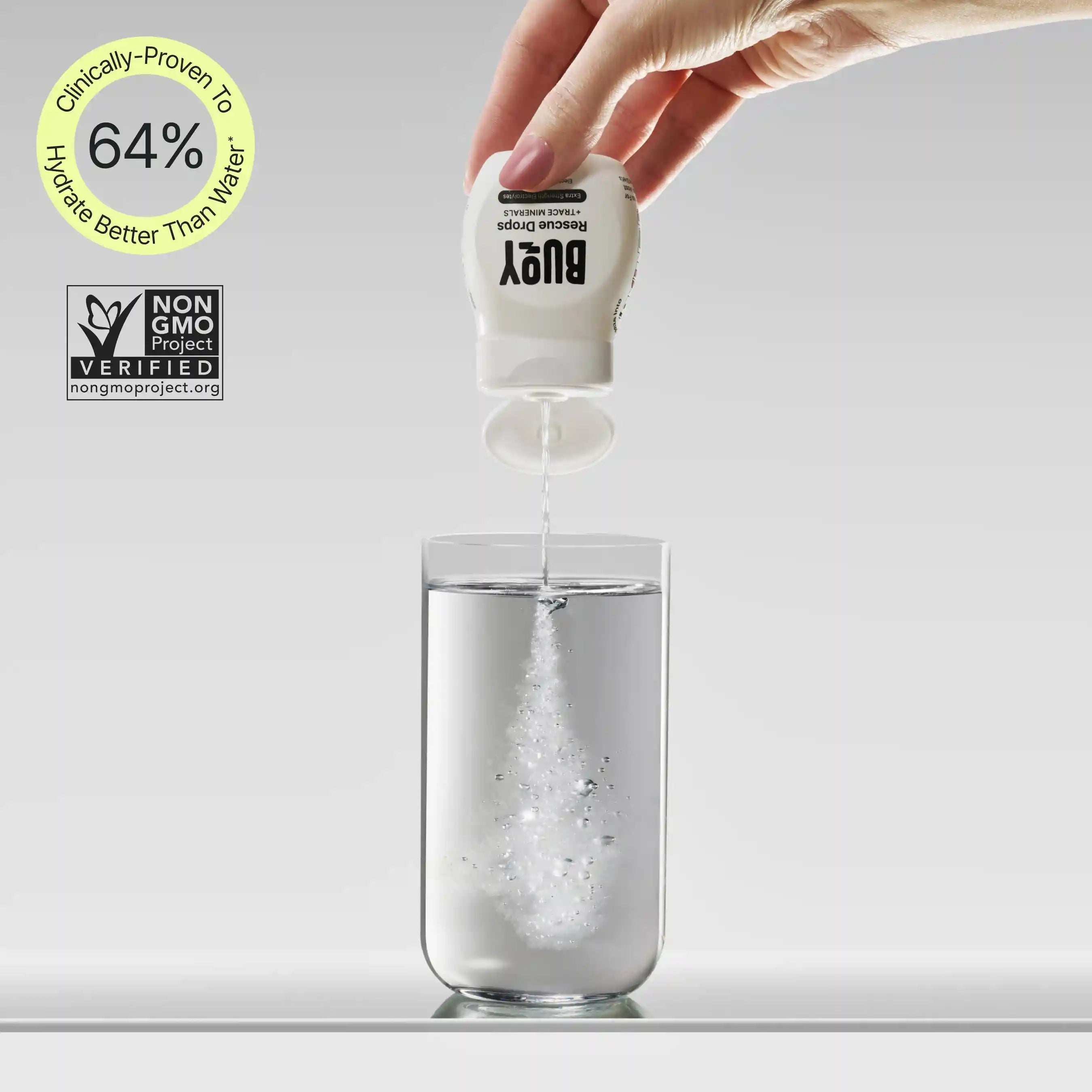
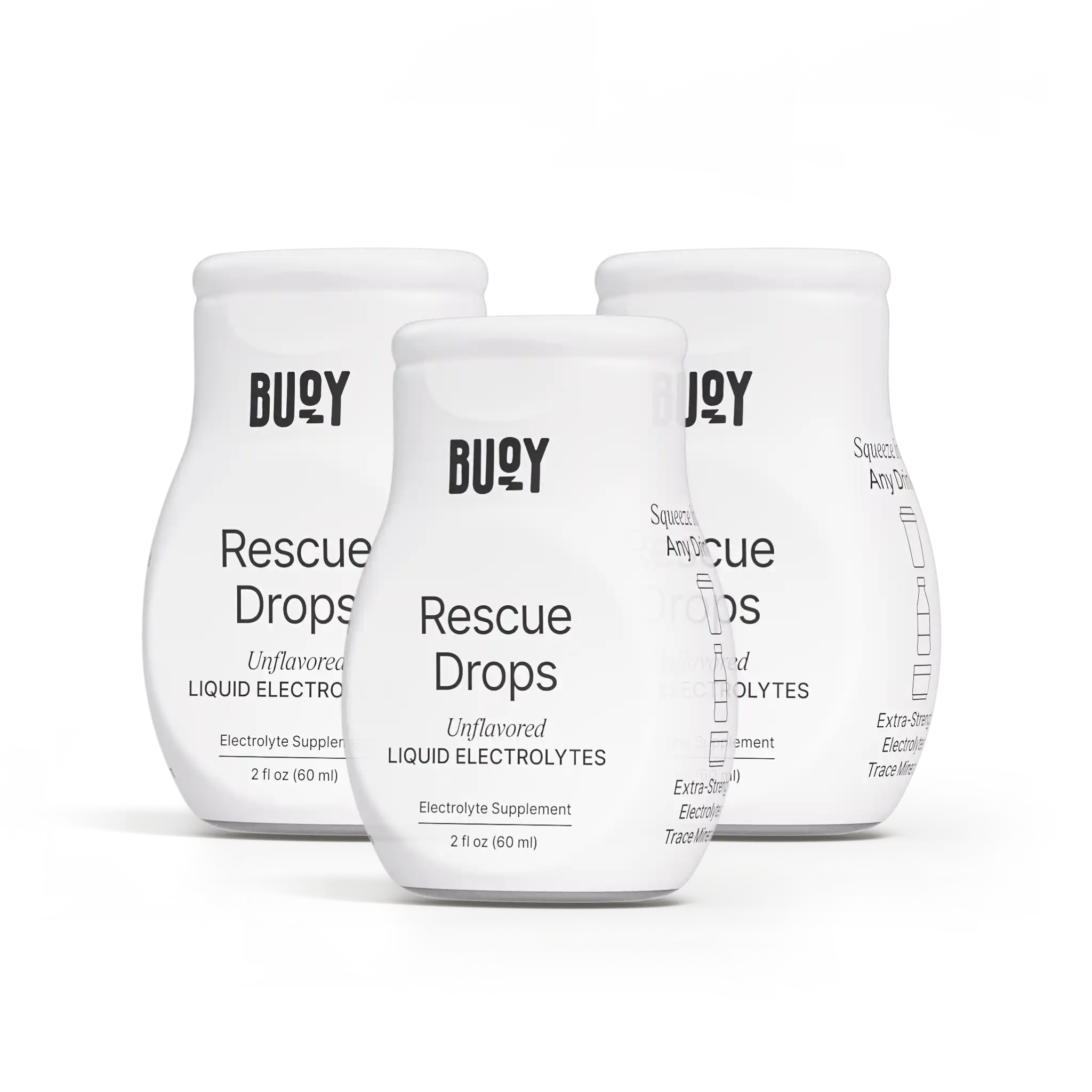



 Buoy's Clinical Study
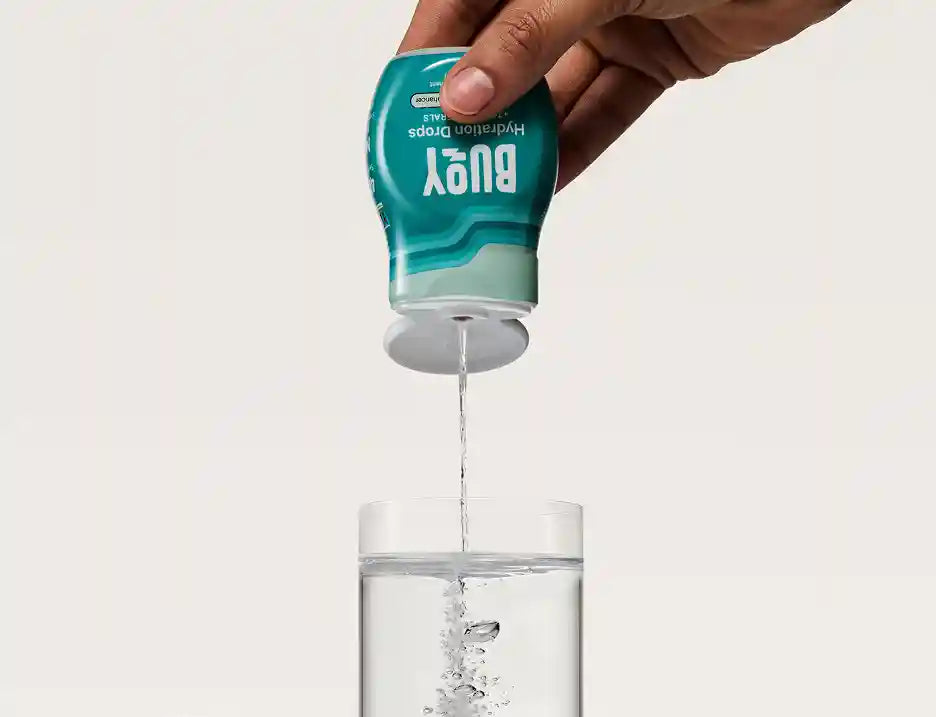
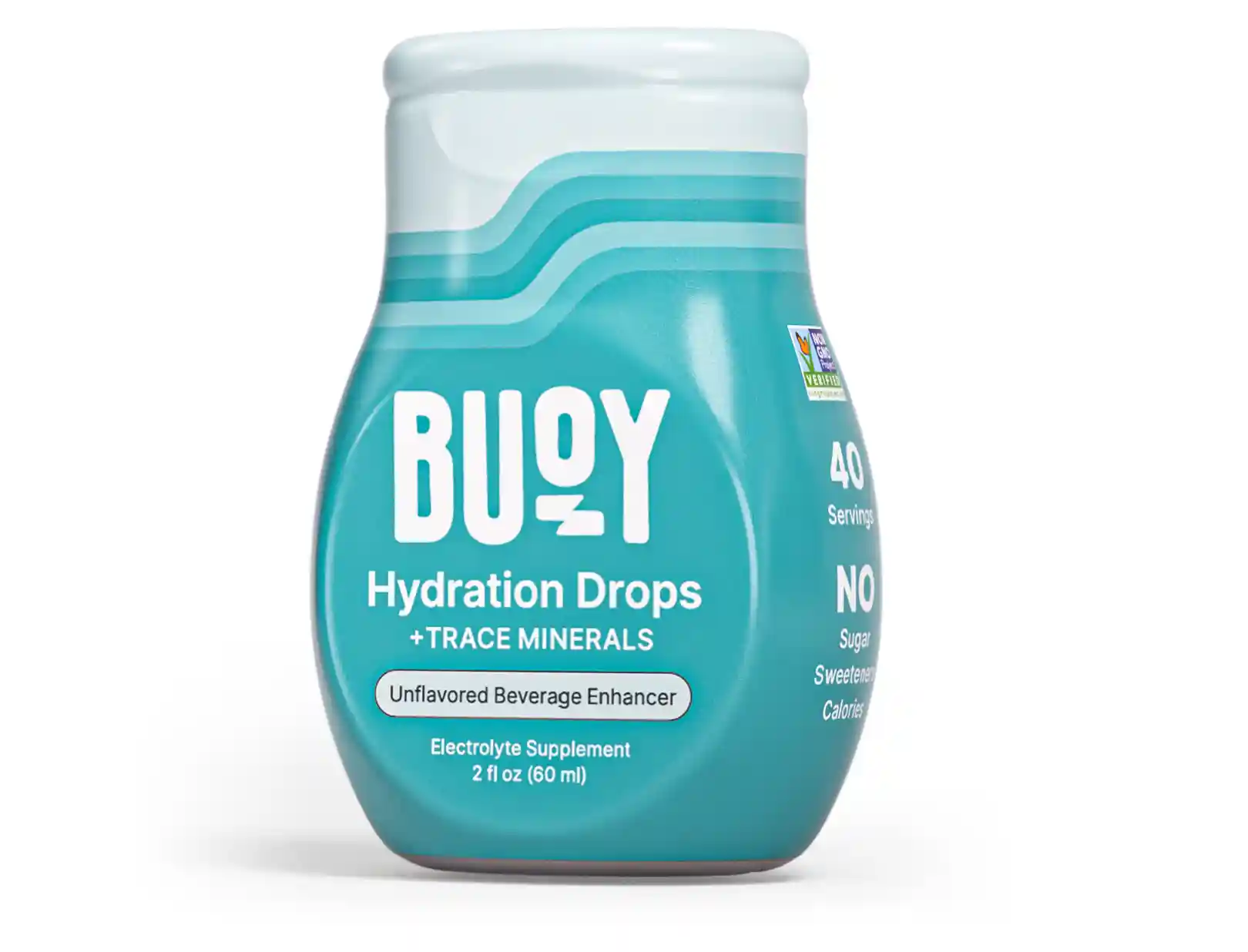
 | Feature | Buoy Hydration Drops | Typical Sports/Electrolyte Drinks |
| Added flavor or citrus extract | None | Common |
| Carbonation | None | Sometimes |
| Added sugar | 0g | Often 5–35g |
| Artificial sweeteners | None | Common |
| Format | Unflavored liquid drops | Flavored liquid or powder |