







Dehydration and Migraines: How Fluid Balance Affects Attack Severity
For many people living with migraine, hydration isn’t just about prevention. It can also influence how intense an attack feels and how long recovery takes. Migraines that follow poor sleep, long days without fluids, heat exposure, or illness often feel harder to manage, with more severe pain, deeper fatigue, or longer-lasting symptoms.
While dehydration doesn’t cause migraines on its own, research suggests that fluid balance can affect attack severity, duration, and recovery in people who are already migraine-prone¹.
Key Takeaways
- Dehydration can contribute to migraine attacks in susceptible individuals.
- Fluid loss may lower the migraine threshold and intensify symptoms.
- Overnight dehydration is a common factor in morning migraines.
- Electrolyte balance matters more than water alone.
- Targeted rehydration may support recovery and attack management.
Understanding how dehydration and electrolyte loss influence the nervous system helps explain why hydration often comes up in conversations about morning migraines, prolonged attacks, and post-migraine exhaustion.
- What the Research Says About Dehydration and Migraines
- How Dehydration Affects the Migraine Brain
- Dehydration as Part of the Migraine Threshold Model
- Morning Migraines and Overnight Fluid Loss
- Can Dehydration Make Migraines Last Longer?
- Why Electrolytes Matter More Than Water Alone
- Signs Dehydration May Be Contributing to Your Migraines
- Supporting Hydration During Migraine-Prone Periods
- How Buoy Rescue Drops Support Targeted Rehydration
- When to Talk to a Doctor About Dehydration and Migraines
- Supporting Hydration Without Overcorrecting
What the Research Says About Dehydration and Migraines
Dehydration is consistently reported by people with migraine as a trigger or aggravating factor. Clinical research supports this connection: a randomized trial found that increasing daily water intake was associated with reduced headache intensity and improved quality of life in people with recurrent headaches².
It’s also important to recognize directionality. Dehydration can act as a trigger, but migraine itself can also cause dehydration through nausea, vomiting, reduced appetite, and sensory aversion to drinking fluids¹. In practice, the two often reinforce each other.
How Dehydration Affects the Migraine Brain
Hydration plays a central role in maintaining blood volume, circulation, and electrolyte balance. When fluids drop, blood volume can decrease, circulation may be affected, and nerve signaling becomes less efficient³.
Migraine brains tend to be more sensitive to physiological changes. Even mild dehydration can influence cognitive performance, increase fatigue, and heighten pain sensitivity⁴. In a nervous system already prone to sensory overload, these shifts may be enough to tip the balance toward an attack.
Dehydration as Part of the Migraine Threshold Model
Migraine is often described as a threshold condition. Genetics and brain physiology set the baseline, while triggers stack together until the threshold is crossed¹.
Dehydration rarely acts alone. It often overlaps with:
- Poor sleep
- Stress
- Skipped meals
- Heat exposure or exercise
When dehydration combines with other stressors, it can lower the threshold and make a migraine more likely to occur or harder to recover from.
Morning Migraines and Overnight Fluid Loss

Morning migraines may be worsened by overnight fluid loss, as mild dehydration upon waking can lower the migraine threshold in susceptible individuals.
Morning migraines are common, and overnight dehydration may play a role. During sleep, the body loses water through breathing and sweat, and several hours pass without fluid intake. Most people wake up mildly dehydrated.
For someone with migraine, starting the day already depleted, especially after poor sleep, may increase vulnerability to an early attack¹. This helps explain why rehydrating in the morning can feel particularly important for migraine management.
Can Dehydration Make Migraines Last Longer?
Dehydration may influence whether a migraine starts, as well as how long it lasts. Fluid loss can worsen fatigue, brain fog, dizziness, and general malaise, all of which are common during and after attacks⁴.
If dehydration persists during the headache or postdrome phases, recovery may feel slower and more draining. Supporting hydration during and after an attack, not just beforehand, may help reduce lingering symptoms.
Why Electrolytes Matter More Than Water Alone
Hydration isn’t only about water volume. Electrolytes, including sodium, potassium, chloride, magnesium, and calcium, are essential for fluid retention, nerve signaling, and muscle and vascular function³.
Drinking large amounts of plain water during heavy depletion may not fully restore balance and, in some cases, can dilute electrolytes further. During periods of intense fluid loss, such as heat exposure, illness, exercise, or migraine flares, electrolyte support for migraines can be especially relevant.
Signs Dehydration May Be Contributing to Your Migraines
Dehydration doesn’t always show up as obvious thirst. Subtle signs may include dark urine, dizziness, fatigue, brain fog, or headaches that appear after long gaps without fluids⁴.
Patterns are often more telling than single events. Migraines that follow heat exposure, exercise, illness, travel, or poor sleep may suggest hydration is playing a contributing role.
Supporting Hydration During Migraine-Prone Periods
Rather than reactive “catch-up” drinking, consistent hydration throughout the day tends to be more effective. Many people with migraine find it helpful to hydrate upon waking, adjust intake during heat or activity, and pair fluids with electrolytes during heavy depletion.
Balance matters. Overhydrating without electrolytes or restricting fluids entirely can both backfire. The goal is steady support rather than extremes.
How Buoy Rescue Drops Support Targeted Rehydration
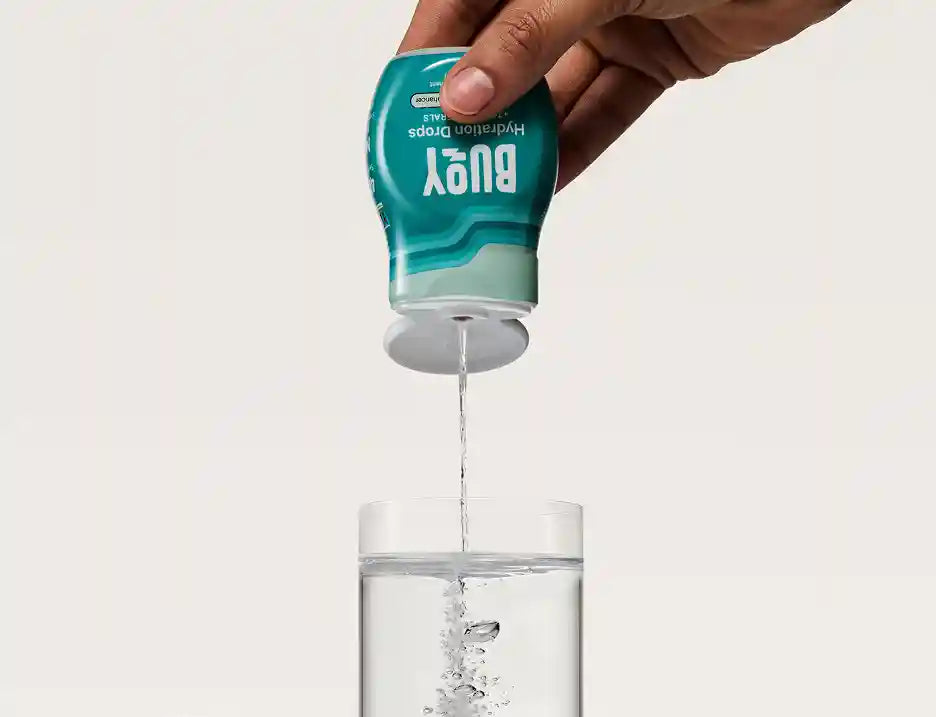
During periods of intense depletion or migraine vulnerability, Buoy Rescue Drops are designed to support rapid, targeted rehydration.
Rescue Drops are Buoy’s most concentrated hydration formula, providing:
- 300 mg sodium to support fluid retention and blood volume
- Chloride (from sea minerals) to help maintain fluid balance
- Potassium (as potassium citrate) for nerve and muscle signaling
- Magnesium and calcium (from sea minerals) to support neuromuscular function
- 87+ trace minerals to help restore overall electrolyte balance
The liquid format allows the drops to be added to water or another beverage and absorbed quickly, which is an approach many people find useful for morning migraines, heat-related attacks, illness, or during recovery. Rescue Drops are intended to support hydration, not to treat migraine itself.
When to Talk to a Doctor About Dehydration and Migraines
Hydration can be an important part of migraine management, but it’s not a substitute for medical care. Talk to a healthcare provider if migraines are increasing in frequency or severity, don’t improve with rest and hydration, or are accompanied by neurological symptoms like weakness, confusion, or vision changes¹.
A clinician can help identify other contributing factors and develop a comprehensive management plan.
Supporting Hydration Without Overcorrecting
Hydration and migraines are closely linked, but managing that relationship often takes experimentation and patience. Supporting fluids and electrolytes consistently, especially during high-risk periods, may help reduce added strain on a sensitive nervous system. Buoy Rescue Drops are designed to fit into that balanced approach, offering targeted hydration support when depletion is most likely.
References
¹ National Institute of Neurological Disorders and Stroke. (n.d.). Migraine. National Institutes of Health.
https://www.ninds.nih.gov/health-information/disorders/migraine
² Spigt, M., Weerkamp, N., Troost, J., van Schayck, C. P., & Knottnerus, J. A. (2012). A randomized trial on the effects of increased water intake in patients with recurrent headaches. Family Practice, 29(4), 370–375. https://academic.oup.com/fampra/article-abstract/29/4/370/492787
³ Popkin, B. M., D’Anci, K. E., & Rosenberg, I. H. (2010). Water, hydration, and health. Nutrition Reviews, 68(8), 439–458. https://academic.oup.com/nutritionreviews/article-abstract/68/8/439/1841926
⁴ Benton, D., & Young, H. A. (2015). Do small differences in hydration status affect mood and mental performance? Nutrition Reviews, 73(Suppl 2), 83–96. https://academic.oup.com/nutritionreviews/article-abstract/73/suppl_2/83/1931019
⁵ Ashina, M., Hansen, J. M., Á Dunga, B. O., & Olesen, J. (2017). Human models of migraine—Short-term pain for long-term gain. Nature Reviews Neurology, 13(12), 713–724. https://www.nature.com/articles/nrneurol.2017.137
⁶ Hajhashemy, Z., Golpour-Hamedani, S., Eshaghian, N., Sadeghi, O., Khorvash, F., & Askari, G. (2024). Practical supplements for prevention and management of migraine attacks: A narrative review. Frontiers in Nutrition, 11, 1433390. https://www.frontiersin.org/journals/nutrition/articles/10.3389/fnut.2024.1433390/full