







Can Dehydration Cause Migraines?
Dehydration is one of the most commonly mentioned migraine triggers, yet it is one of the most misunderstood. Many people living with migraine notice that headaches are more likely to appear after long days without water, poor overnight sleep, illness, heat exposure, or intense exercise. But can dehydration actually cause migraines, or is it just one factor among many?
The answer is nuanced. Dehydration doesn’t cause a migraine on its own, but research suggests it can lower the migraine threshold, making attacks more likely in people who are already neurologically sensitive¹.
Key Takeaways
- Dehydration is a commonly reported migraine trigger.
- Even mild fluid loss can affect brain function and pain sensitivity.
- Overnight dehydration may increase morning migraine risk.
- Electrolyte balance matters, not just total water intake.
- Frequent or severe migraines should be evaluated by a medical professional.
Understanding how hydration, overnight fluid loss, and electrolyte balance affect the brain can help people better support themselves during migraine-prone periods.
- How Dehydration Affects the Brain and Nervous System
- Can Dehydration Trigger a Migraine Attack?
- The Role of Overnight Fluid Loss in Migraines
- Why Electrolyte Balance Matters More Than Water Alone
- Signs Dehydration May Be Contributing to Your Migraines
- Supporting Hydration During Migraine-Prone Periods
- How Buoy Rescue Drops Support Rapid Rehydration
- When to Talk to a Doctor About Migraines and Dehydration
- Supporting Hydration Without Overdoing It
How Dehydration Affects the Brain and Nervous System
Water plays a critical role in maintaining blood volume, supporting circulation, and enabling normal nerve signaling throughout the body. When fluid levels drop, even slightly, the brain can be affected.
Research shows that mild dehydration may influence mood, attention, and cognitive performance². From a neurological standpoint, dehydration can reduce blood volume and alter electrolyte concentrations, both of which are essential for proper nerve impulse transmission³. Because migraine involves heightened sensory sensitivity and altered brain signaling, people with migraine may be especially susceptible to these changes¹.
Can Dehydration Trigger a Migraine Attack?

Dehydration can contribute to migraine attacks, often causing intense forehead pain and pressure.
Dehydration is best understood as a trigger, not a root cause. Migraine is a neurological disease influenced by genetics and brain physiology¹. Triggers like dehydration, stress, sleep disruption, or skipped meals can stack together until the brain crosses a threshold and an attack begins.
Clinical research supports this relationship. A randomized trial examining increased water intake in people with recurrent headaches found that improved hydration was associated with reduced headache intensity and improved quality of life⁵. While this doesn’t mean hydration prevents migraines entirely, it suggests dehydration may contribute meaningfully to headache burden in some individuals.
It’s also important to note that dehydration can be both a cause and a consequence of migraines. Nausea, vomiting, and sensory sensitivity during attacks often make it harder to drink fluids, potentially worsening dehydration as the migraine progresses¹.
The Role of Overnight Fluid Loss in Migraines
Many people wake up mildly dehydrated. During sleep, the body loses water through breathing and sweating, and hours pass without fluid intake. For people with migraine, starting the day already depleted may lower the threshold for an early-morning or “wake-up” migraine.
This may help explain why some people experience migraines shortly after waking, especially if dehydration combines with poor sleep, stress, or hormonal shifts¹. Rehydrating early in the day and doing so consistently may help support overall migraine management.
Why Electrolyte Balance Matters More Than Water Alone
Hydration isn’t just about water volume; it’s also about electrolytes, particularly sodium. Electrolytes help regulate fluid balance, support nerve signaling, and maintain normal muscle and vascular function³.
Drinking large amounts of plain water without replacing electrolytes may not fully restore balance during periods of heavy depletion, such as heat exposure, illness, intense exercise, or migraine flares. In some cases, this can even dilute sodium levels, making it harder for the body to retain the fluid consumed³.
For people with migraine who are sensitive to hydration shifts, electrolyte balance may play an important role in how effective hydration feels.
Signs Dehydration May Be Contributing to Your Migraines
Dehydration doesn’t always present as extreme thirst. Subtle signs can include fatigue, dizziness, dark-colored urine, dry mouth, or brain fog². Migraine patterns that appear after long periods without fluids, overnight sleep, heat exposure, illness, or physical exertion may also point toward hydration as a contributing factor.
Rather than focusing on a single migraine, it’s more helpful to look for patterns over time, especially when dehydration overlaps with other known triggers.
Supporting Hydration During Migraine-Prone Periods
Consistent hydration is often more effective than reactive “catch-up” drinking. Practical strategies may include sipping fluids throughout the day, drinking shortly after waking, and adjusting intake during heat, illness, or increased activity.
Pairing fluids with electrolytes during periods of heavy depletion may help the body absorb and retain hydration more effectively³. At the same time, extremes, such as forcing excessive water intake, are unlikely to be helpful and may create additional discomfort.
How Buoy Rescue Drops Support Rapid Rehydration
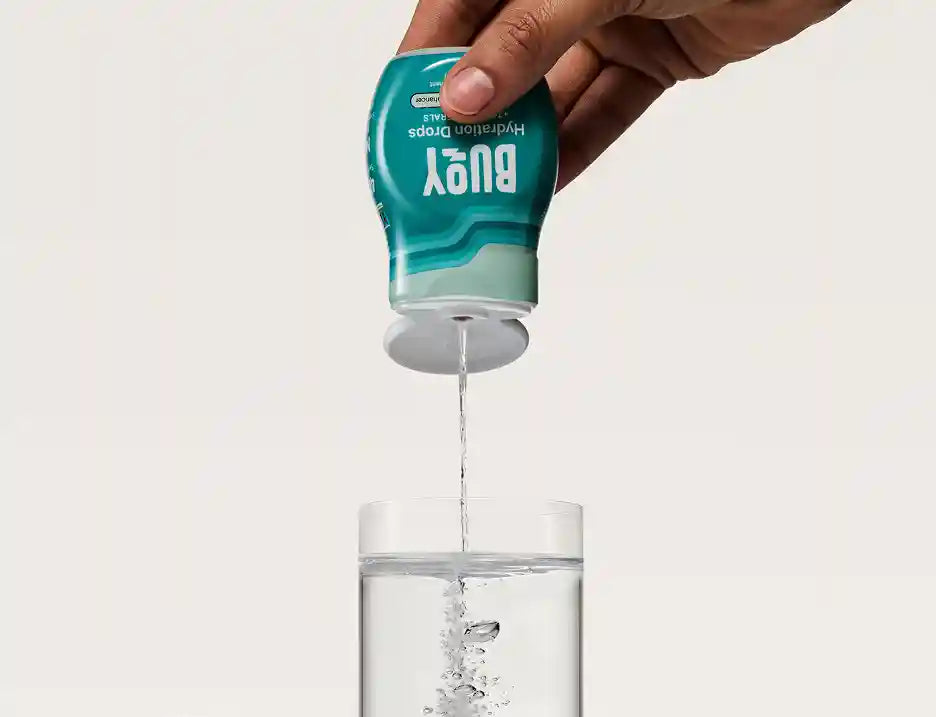
For situations involving intense depletion or migraine flares, Buoy Rescue Drops are designed to provide targeted hydration support in a concentrated, liquid format.
Rescue Drops are Buoy’s most potent hydration formula, delivering a higher level of electrolytes to help restore balance when fluid and mineral loss is significant. Each serving includes:
-
300 mg of sodium, which plays a key role in fluid retention and maintaining blood volume during dehydration
-
Chloride (from sea minerals), which works alongside sodium to support fluid balance and normal nerve signaling
-
Potassium (as potassium citrate), an electrolyte involved in muscle function and electrical signaling in the nervous system
-
Magnesium (from sea minerals), which supports neuromuscular function and is commonly discussed as a supplement that may support migraines
-
Calcium (from sea minerals), essential for nerve transmission and muscle contraction
- 87+ trace minerals, naturally present in sea minerals, to help support overall electrolyte balance
This high-sodium profile may be especially useful during periods of heavy fluid loss, such as overnight dehydration, heat exposure, illness, or migraine flares, when plain water alone may not feel sufficient. Rescue Drops are intended to support hydration, not treat migraine, and can be used preventively or during high-risk periods.
When to Talk to a Doctor About Migraines and Dehydration
While hydration can be an important part of migraine management, frequent or severe migraines should always be discussed with a healthcare professional. Seek medical guidance if migraines are increasing in frequency or severity, occur with neurological symptoms like confusion or weakness, or don’t improve with rest and hydration.
A doctor can help rule out other causes, assess hydration needs, and develop a comprehensive migraine management plan tailored to your individual triggers¹.
Supporting Hydration Without Overdoing It
Staying hydrated during migraine-prone periods can feel challenging, especially when nausea, fatigue, or sensitivity make drinking difficult. Supporting hydration in a balanced, consistent way may help reduce one contributing factor to migraine attacks without adding extra strain. Buoy Rescue Drops offer a simple option for targeted hydration when you’re depleted or managing a flare, helping you restore balance without overdoing it.
References
¹ National Institute of Neurological Disorders and Stroke. (n.d.). Migraine. National Institutes of Health. https://www.ninds.nih.gov/health-information/disorders/migraine
² Benton, D., & Young, H. A. (2015). Do small differences in hydration status affect mood and mental performance? Nutrition Reviews, 73(Suppl 2), 83–96. https://academic.oup.com/nutritionreviews/article-abstract/73/suppl_2/83/1931019
³ Popkin, B. M., D’Anci, K. E., & Rosenberg, I. H. (2010). Water, hydration, and health. Nutrition Reviews, 68(8), 439–458. https://academic.oup.com/nutritionreviews/article-abstract/68/8/439/1841926
⁴ Hajhashemy, Z., Golpour-Hamedani, S., Eshaghian, N., Sadeghi, O., Khorvash, F., & Askari, G. (2024). Practical supplements for prevention and management of migraine attacks: A narrative review. Frontiers in Nutrition, 11, 1433390.https://www.frontiersin.org/journals/nutrition/articles/10.3389/fnut.2024.1433390/full
⁵ Spigt, M., Weerkamp, N., Troost, J., van Schayck, C. P., & Knottnerus, J. A. (2012). A randomized trial on the effects of increased water intake in patients with recurrent headaches. Family Practice, 29(4), 370–375.https://academic.oup.com/fampra/article-abstract/29/4/370/492787