







Hydration and Your Immune System: All the “Need-to-Knows”
Believe it or not, there’s more to hydration than just getting enough fluids. It’s also about getting enough electrolytes. If you’re low on either one, you can start experiencing side effects like headaches, brain fog, and a weakened immune system.
Staying hydrated is about giving your body the raw materials it needs to protect itself. Every time your immune system detects a threat, it relies on water and minerals to move signals, transport cells, and keep critical defense systems online. When hydration slips, those processes slow down, making it harder for your body to respond the way it should.
Essential Takeaways:
- Hydration is the bedrock for a strong immune system. Your car can't run without oil, right?
- Don't pass on those zesty electrolytes when reaching for an immune booster. Buoy + Immunity is our clear favorite!
Understanding how hydration and electrolytes work together can help you make smarter daily choices that support immune health long before you ever feel run down. Let’s look at it a bit closer!
- The Role of Hydration in Strengthening Immunity
- How Your Immune System Works (for Dummies)
- How Water Supports Immunity
- How Electrolytes Support Immunity
- How Can I Boost Hydration and Immunity Together?
- 3 Tips to Hydrate Smarter and Boost Immunity
- Hydration & Immunity, a Match Made in Heaven
The Role of Hydration in Strengthening Immunity
Your immune system doesn’t run on vibes; it runs on fluid balance.
When you’re well-hydrated, your body can do the basics that matter for immune defense:
- Move nutrients + oxygen to the cells doing the work
- Remove waste efficiently
- Support temperature regulation (your body’s built-in “overheat protection”)
- Keep mucosal surfaces (mouth, nose, throat) from drying out (help trap and block things you don’t want getting deeper into your body).
Hydration also matters for immune cell movement. Your body uses chemical signals to tell immune cells where to go and research from the Francis Crick Institute describes how water and ions moving into T cells helps them migrate to where they’re needed. In simple terms: fluid balance helps immune cells get to the fight faster.
And there’s a gut angle too: a study on water restriction found that inadequate water intake can disrupt gut homeostasis and is linked with reduced immune cells in the colon (including Th17 cells), alongside changes in the microbiome.
Bottom line: hydration supports immunity through multiple systems (barriers, circulation/transport, cell function, gut-immune connection). It’s not “magic,” but it’s foundational.
How Your Immune System Works (for Dummies)
The immune system is the group of organs and blood cells that fight infection, disease, allergies, and autoimmune conditions. Officially, the immune system includes the following organs:
- Lymph nodes
- Spleen
- Bone marrow
- Tonsils
- Thymus gland
These organs make and release white blood cells called “lymphocytes” that identify and fight foreign invaders (1). But there’s actually more to it... Your immune system also relies heavily on water and electrolytes. Gut health is super important as well, but more on that later...
For now, let’s take a closer look at how water and electrolytes support immunity.
How Water Supports Immunity
Chances are you’ve already heard the fact that the human body is mostly water—60% to be exact (2). The most important parts, like the heart and brain, are about 73% water, the kidneys are 79% and the lungs are a whopping 83% agua mineral. When it comes to the human body, water is big business. It shouldn’t be too surprising, then, that water plays a big role in critical bodily functions.
What exactly does water do for you?
- Forms saliva
- Aids digestion
- Keeps mucosal membranes moist
- Allows the body’s cells to grow, reproduce and survive
- Flushes waste
- Helps the brain make hormones and neurotransmitters
- Regulates body temperature through sweating and respiration
- Converts food into energy
- Helps deliver oxygen throughout the body
- Lubricates joints
Many of these functions directly support your immune system. In other words, if you're low on fluids, you’re screwed. Let’s take a closer look at why:
Sweat Out Toxins and Disease
Sweating is one of the main ways that the body removes contaminants from the blood. This includes cellular waste products, environmental toxins, and harmful bacteria. If you’re too dehydrated to sweat like you’re supposed to, these pathogens can develop into gnarly infections. Sweating helps you survive fevers too. When the body heats up to kill a virus, your sweat cools you down before you cook to death. So the next time you’re sick, make sure to drink plenty of water.
Lymphatic Juices
The lymphatic system is the body’s waste removal system. At the same time, lymph fluid transports white blood cells all over the body to kill pathogens. Lymph fluid is mostly water, so if you’re dehydrated it’s not going to work properly. Dehydrated lymph gunks up your system and moves more slowly. A hydrated lymphatic system, on the other hand, works like a charm.
Mucus Production
Who doesn’t love mucus?! Mucus has a nasty reputation as the slime that backs up your sinuses, but the truth is your immune system needs it. It contains antibodies and enzymes that fight infections (3). At the same time, mucus acts as a barrier between the bacteria, smoke and dust you breathe. When your mucus is dehydrated and dry, this barrier breaks down and it’s open season on your sinuses. So make sure to drink plenty of water and keep those mucus membranes moist.
Nutrient Absorption
You can pig out on immune-boosting foods until the cows come home, but if your body sucks at absorbing the nutrients, it isn’t going to mean squat. Fortunately, if you drink water and follow the other guidelines in this article, you should be fine. That includes getting plenty of electrolytes, but more on that in a sec.
Stomach Acid
The body needs water in order to produce stomach acid (hydrochloric acid). Stomach acid breaks down food particles in the small intestine, but that’s not all... It also kills harmful bacteria and viruses and protects you from infections (4). Surprisingly, stomach acid even helps kill respiratory infections... Your body uses water to flush viruses out of the upper respiratory tract and into the gut, then your stomach acid finishes them off.
How Electrolytes Support Immunity
When it comes to hydration and immunity, electrolytes are the Yin to your water’s Yang. Studies show that electrolytes affect white blood cell development, but some electrolytes are more important for immunity than others (5).
Here are the heavy hitters:
- Zinc
- Magnesium
- Potassium
- Calcium
- Sodium
- Chloride
Sodium and potassium, for example, support immunity by regulating the cell membrane. Calcium, zinc, and magnesium, on the other hand, act as messengers that regulate immune cell signaling.
Here’s how each of these electrolytes supports immunity:
Zinc Kills Bacteria
By the time cold and flu season rolls around, your body should already be stocked up on zinc. Zinc supports immunity in a few different ways. First off, it acts as an antioxidant and protects the cells from free radicals and inflammation. At the same time, zinc supports immune cells called neutrophils, NK cells, and macrophages (cells that kill harmful bacteria) (6). These cells also help the body make white blood cells. Plus, zinc supports nutrient absorption and helps regulate membrane permeability.
Magnesium Fights Inflammation
Magnesium strengthens the immune system by:
- Regulating cell death
- Activating immune cells
- Fighting inflammation
Studies show that a magnesium-deficient diet triggers inflammation and free radical production (7). Considering that inflammation is the root of most diseases, this is a big deal.
Potassium Regulates Stomach Acid
Potassium plays a key role in regulating stomach acid production. Stomach acid helps kill harmful bacteria, but too much stomach acid can erode the gut lining and compromise your immunity. It’s all about balance. Luckily, potassium helps keep your pH levels in check. Plus, potassium may even help fight cancer. Researchers notice that unhealthy white blood cells in cancer patients are often caused by potassium deficiency. One study found that a potassium-based medication can help white blood cells attack cancer cells (8).
Calcium Triggers the Immune Response
Calcium sets the entire immune response into motion. How does it work? In order to heal damaged tissues, calcium spreads around the edge of the wound and attracts the first white blood cells. Calcium also fights viruses by helping white blood cells multiply and spread throughout the body.
Sodium May Treat Infections
One recent study found that increasing sodium may help treat infections in sodium-deficient individuals (9). Several types of immune cells depend on sodium, including cells in the skin, kidney, and intestines. Plus, sodium deficiency can alter your gut bacteria and weaken the gut lining. Sodium may also fight inflammation and treat autoimmune conditions through its impact on immune cells.
It’s important to not overdo it, though... The modern western diet is too high in sodium and there is such a thing as too much. Excess sodium has been linked to obesity and heart disease. Once again, it’s all about balance.
Chloride Fights Viruses
Chloride works closely with sodium to support immunity. In nature, they’re found together as sodium chloride, a.k.a. table salt. Research shows that chloride helps immune cells fight viruses, including the human coronavirus 229E and influenza A virus (10).
How Can I Boost Hydration and Immunity Together?
If you want hydrate + immune support at the same time, focus on the overlap: consistent fluids + smart electrolyte use + gut-friendly foods.
1) Hit a realistic daily fluid target (then adjust)
A widely used baseline from the U.S. National Academies is:
- Men: 15.6 cups/day
- Women: 11.4 cups/day
This includes fluids from water + other beverages + food.
You may need more if you’re:
-
exercising a lot
-
in heat/humidity
-
sick (fever, vomiting, diarrhea)
- pregnant/nursing
2) Protect your “front-line” defenses (mucous membranes)
Your mouth/nose/throat are part of your first line of defense. If you’re dehydrated, dryness can make those surfaces less comfortable and potentially less effective as a barrier. Staying hydrated helps keep these tissues supported.
3) Use electrolytes when they actually matter
Electrolytes can support hydration by helping regulate fluid balance. They’re most useful when you’re losing water + salt (sweat, heat, endurance exercise, vomiting/diarrhea).
If you’re dealing with diarrhea/vomiting, a glucose-electrolyte oral rehydration solution (ORS) is specifically designed for effective rehydration.
4) Eat hydration-friendly, immune-supportive foods
This is the “two birds, one stone” move:
-
water-rich foods (fruit/veg, soups/broths)
-
mineral-rich foods (potassium/magnesium sources)
- fiber-rich foods to support the gut-immune connection
5) Don’t ignore dehydration warning signs
Dehydration can cause symptoms like unclear thinking, mood changes, constipation, and kidney stones — and can get worse if you don’t correct it.
If dehydration is severe or persistent (especially with GI illness), seek medical guidance.
3 Tips to Hydrate Smarter and Boost Immunity
Squeeze a hydration + immunity boost into the beverages you’re already drinking! It’s the easiest way to get the vitamins, minerals, and antioxidants you need to stay hydrated and boost immunity.
Sip Water Throughout the Day
Raise your hand if you forget to drink water. We’re all guilty of it some days. Although there’s no golden rule for how much to drink, try to shoot for a cup an hour—that’s an actual cup by the way, not a full glass or coffee mug’s worth.
Keep in mind that you might need to drink more if you exercise, it’s hot out or you sweat a lot. The more you sweat, the more fluids and electrolytes you’ll have to replace. In hot weather, you can lose over a quart of water an hour in sweat!
Certain medications can dehydrate you faster too.
Hydrate Before, During, and After Exercise
One of the worst things you can do is go into a workout dehydrated. You’ll pay for it later when you have a dehydration headache and your muscles start cramping. A good rule of thumb is to drink about 16 ounces of water two hours before your workout. During your workout, take a sip of electrolyte-enhanced water every ten minutes. After you’re done exercising, squeeze more Buoy into your protein shake and keep sipping on water throughout the day. It should help you perform better, avoid muscle cramps, and recover faster.
Eat Hydrating Foods
Some healthy foods contain a lot of electrolytes, some contain a lot of water, and some have both. Others are packed to the brim with immune-boosting antioxidants. Here are a few of the most hydrating foods for a stronger immune system:
-
Bone Broth: Chicken and beef bone broth might be the single best food for your immune system. For starters, it contains plenty of fluids. It’s also one of nature’s best sources of collagen, a protein that heals the gut and supports nutrient absorption. Plus, bone broth is loaded with immune-boosting amino acids like proline, glycine, arginine, and glutamine. These amino acids improve digestion, fight inflammation, and treat autoimmune disorders.
-
Yellow Bell Pepper: Yellow bell pepper contains more vitamin C than any other whole-food on the planet. Vitamin C acts as an antioxidant and helps the body make collagen. Yellow pepper is also loaded with fiber to fuel healthy gut bacteria, strengthen the gut lining, and push food through the digestive tract.
-
Strawberries: Strawberries have high water content and are full of disease-fighting antioxidants, including vitamin C, manganese, and folate (11).
-
Cucumbers: Cucumbers are 96% water. They’re also loaded with nutrients and electrolytes, especially magnesium, manganese, potassium, and vitamin C.
- Citrus Fruits: Citrus fruits, like lemons, limes, grapefruits, and oranges contain plenty of fluids and high concentrations of vitamin C.
Regardless of whether you eat it or drink it, WATER + ELECTROLYTES = HYDRATION.
Hydration & Immunity, a Match Made in Heaven
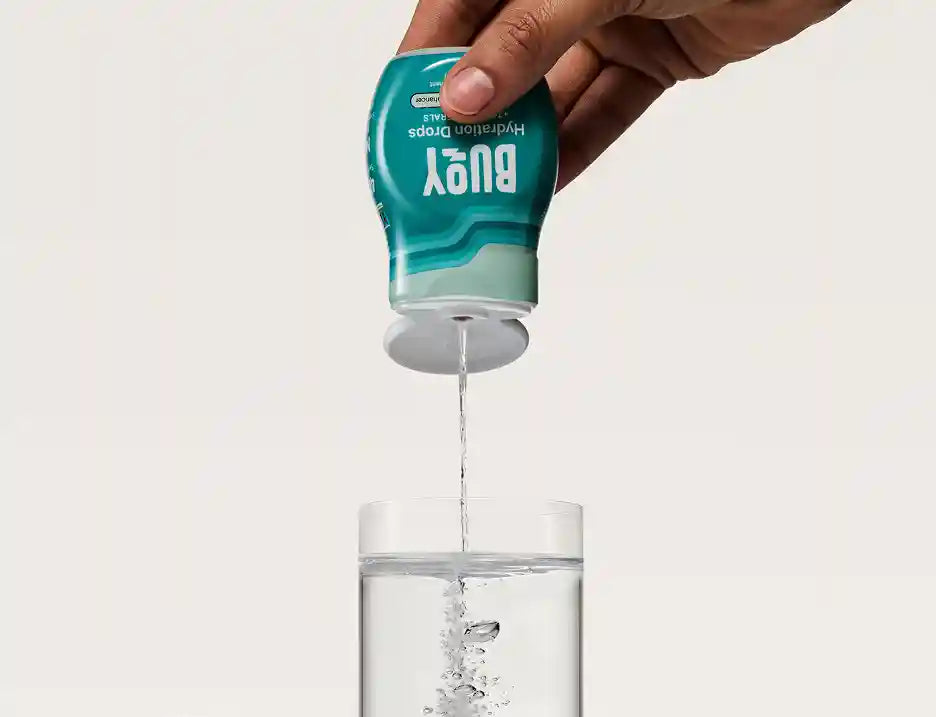
We now know that hydration is the foundation of a strong immune system, but we also know that sometimes you can use a little extra immune support. The Buoy Hydration team has you covered with all new Buoy + Immunity.
All of the essential electrolytes, B vitamins, and antioxidants found in their original Buoy product + immune-supporting vitamins A, C, D3, E + Zinc + Elderberry + Echinacea + Ginger Root.
Carry the 6 and take the square root of 2, and you’ve got a recipe for a stronger immune system with just a half-second squeeze into any drink. Learn more about hydration and immunity.
Stay not thirsty people!

References:
- https://www.ncbi.nlm.nih.gov/books/NBK279364/
- https://www.usgs.gov/special-topic/water-science-school/science/water-you-water-and-human-body?qt-science_center_objects=0#qt-science_center_objects
- https://www.ncbi.nlm.nih.gov/pmc/articles/PMC4752725/
- https://www.ncbi.nlm.nih.gov/pmc/articles/PMC2223456/
- https://www.ncbi.nlm.nih.gov/pmc/articles/PMC2277319/
- https://www.ncbi.nlm.nih.gov/pmc/articles/PMC5783146/
- https://www.ncbi.nlm.nih.gov/pmc/articles/PMC1201164/
- https://www.ncbi.nlm.nih.gov/pmc/articles/PMC5203836/
- https://www.nature.com/articles/s41598-018-31936-y
- https://pubmed.ncbi.nlm.nih.gov/22788743/