






Does Water Contain Electrolytes?
Water—it's our go-to drink for cooling down, perking up, and quenching our thirst. But have you ever wondered what's actually in that clear, refreshing liquid?
Does water contain electrolytes, those essential minerals that power so many of our body's functions? Make yourself comfortable, grab a glass of water, and let’s dive into the details.
Essential Takeaways
- The electrolyte content in water varies. The water we consume daily, be it tap water or bottled, typically contains electrolytes like calcium, magnesium, potassium, and sodium.
- Intentionally incorporating electrolytes into your daily routine can revolutionize your health, athletic performance, and overall well-being.
- Demystifying Water’s Composition: Does All Water Have Electrolytes?
- Tap, Bottled, And Well Water: Which Has More Electrolytes?
- Does Water Contain Potassium And Other Key Electrolytes?
- Understanding the Role of Electrolytes in Hydration
- The Benefits of Electrolyte-Enhanced Hydration
- When Is Plain Water Enough, And When Do You Need More Electrolytes?
- Optimal Hydration for Peak Performance
- Enhance Your Water and Wellness with Buoy
Demystifying Water’s Composition: Does All Water Have Electrolytes?
You might think that water is just water—pure, simple, and nothing else. But the reality is, the water you're sipping on probably isn't just H2O. Whether it comes from the tap, a bottle, or a bubbling brook, most water sources contain a variety of other elements, some of which are electrolytes.
The Changing Electrolyte Content in Water
Electrolytes like calcium, magnesium, potassium, and sodium are found in most natural water sources, but the amounts can vary a lot. Tap water, well water, and many bottled spring waters all contain small amounts of these minerals. Purified or distilled water usually contains very little, because most minerals are removed during processing (1)(2). The levels are not as concentrated as in an electrolyte drink, but they still contribute to your daily intake in a small way.
Over time, changes in water treatment and filtration have reduced mineral content in many supplies. That means the water you drink today may provide fewer electrolytes than water from natural, less processed sources in the past (1). For people who sweat a lot, train often, or live in hot climates, relying on water alone may not provide enough electrolytes to fully support hydration needs.

Tap, Bottled, And Well Water: Which Has More Electrolytes?
Different types of water can have very different mineral profiles. Municipal tap water often contains some calcium, magnesium, sodium, and small amounts of other minerals, but the levels depend on the local source and treatment methods (1). Well water can be higher in certain electrolytes, especially if it passes through mineral rich rock or soil. Bottled spring and mineral waters usually list calcium, magnesium, and sodium on the label so you can see how much you are getting.
Purified, reverse osmosis, or distilled waters tend to have very low electrolyte content because most minerals have been removed. If you mostly drink these types of water, you may be getting fewer electrolytes from your water than you expect. Checking labels and knowing your source can help you understand how much support your “plain” water is really providing.
Does Water Contain Potassium And Other Key Electrolytes?
Most natural water sources contain a mix of electrolytes, including small amounts of potassium, along with calcium, magnesium, and sodium (1)(2). The exact amounts depend on where the water comes from and how it is treated. Some mineral waters list potassium on the label, but in many cases the amounts are modest compared with what you get from food. Think of water as a supporting source of electrolytes instead of the main one. Your fruits, vegetables, and other whole foods still do most of the heavy lifting when it comes to potassium intake.
Understanding the Role of Electrolytes in Hydration
All right, we've established that water isn't just water and often contains some electrolytes. But you might be wondering, why does it matter? What's so special about electrolytes when it comes to hydration?
Is Water Itself An Electrolyte?
Pure water on its own is not considered an electrolyte. An electrolyte is a substance that produces ions and can conduct electricity when dissolved in water. Minerals like sodium, potassium, calcium, and magnesium fit that definition (2). Water is the fluid that carries these ions. When electrolytes dissolve in water, the solution can conduct electricity, support nerve signals, and help muscles contract. So water is the medium, and the dissolved minerals are the electrolytes that do the electrical work inside your body.
Why Electrolytes Are Essential for Hydration
When we discuss hydration, we're not just talking about water. Sure, it's the star of the show, but electrolytes are the supporting cast making everything run smoothly. They regulate the movement of water in and out of our cells, keeping us well-balanced and not waterlogged (3).
But that's not all they do. Electrolytes are the superconductors of our bodies, transmitting messages between nerves and muscles. So, everything from your heartbeat to your reflexes? Yeah, that's electrolytes at work (3).
Well, even if you're drinking water like it's your job, you could end up with a condition called hyponatremia. This medical term refers to when there's an excess of water and insufficient sodium in your blood, a balance that's crucial for optimal health (4). Clearly, hydration is about more than just water consumption.
The Benefits of Electrolyte-Enhanced Hydration
Now that we understand how crucial electrolytes are for hydration and overall body function, it makes sense to try and get more of them, right? That's where electrolyte-enhanced drinks come into the picture.
Boosting Hydration with Electrolytes
Electrolyte drinks are like your regular water but supercharged with electrolytes. These drinks are designed to give your body a hydration boost, particularly after intense physical activity or while recovering from illness. And unlike plain water, they can help you rehydrate quickly and effectively (5).
Increasing Your Body’s Energy
But the benefits don't stop there. Electrolytes are the sparks that ignite our bodies' energy. By increasing your electrolyte intake, you may find yourself feeling more awake and alert. Electrolytes can also aid digestion, enhance nutrient absorption, and contribute to your overall well-being (3).
By incorporating electrolyte-enhanced drinks into your routine, you can optimize your hydration, energy levels, and overall health (5).
When Is Plain Water Enough, And When Do You Need More Electrolytes?
Plain water is usually enough for everyday activities when you are not sweating heavily and your diet includes a variety of mineral rich foods. Sipping water throughout the day, eating fruits and vegetables, and listening to your thirst cues can support healthy hydration for many people in low to moderate activity settings (1)(2).
Extra electrolytes become more important when your fluid and mineral losses go up. Long workouts, hot and humid weather, heavy sweating, illness with vomiting or diarrhea, or long days on your feet can all increase how much sodium, potassium, and other electrolytes you lose (1)(4). In those situations, adding electrolytes to your water helps replace what you are losing instead of diluting levels further. Products like Buoy Hydration Drops make it simple to turn regular water into water with added electrolytes, without sugar or heavy flavors, so you can match your hydration to what your body is actually going through.
Optimal Hydration for Peak Performance
We've all heard how important it is to stay hydrated. But proper hydration isn't just about drinking water—it's about balancing water with electrolytes. And when you manage to do that? You're on your way to peak performance.
Being optimally hydrated means your body has everything it needs to operate at its best. You might find yourself with more energy, sharper focus, and a stronger immune system (1). And if you live an active lifestyle, proper hydration can support your muscles, prevent cramps, and speed up recovery after a workout (5).
Balancing water with electrolytes also helps you avoid swinging too far in either direction. Drinking large amounts of plain water without any electrolytes can sometimes dilute blood sodium levels, especially during long or intense exercise sessions (3)(4). On the other hand, not drinking enough fluid makes it harder for your body to regulate temperature and deliver nutrients. A mix of steady fluid intake, smart electrolyte support, and attention to hunger and thirst cues gives you the best chance of feeling and performing at your best.
Enhance Your Water and Wellness with Buoy
It turns out your humble glass of water does contain electrolytes. However, for those of us striving for optimal wellness, regular water may not contain enough of these potent minerals to help us maintain our electrolyte balance.
So, here's the good news. Buoy's selection of wellness drops can transform your everyday glass of water into a powerful tool for optimal health. Let's get you acquainted.

Hydration Drops
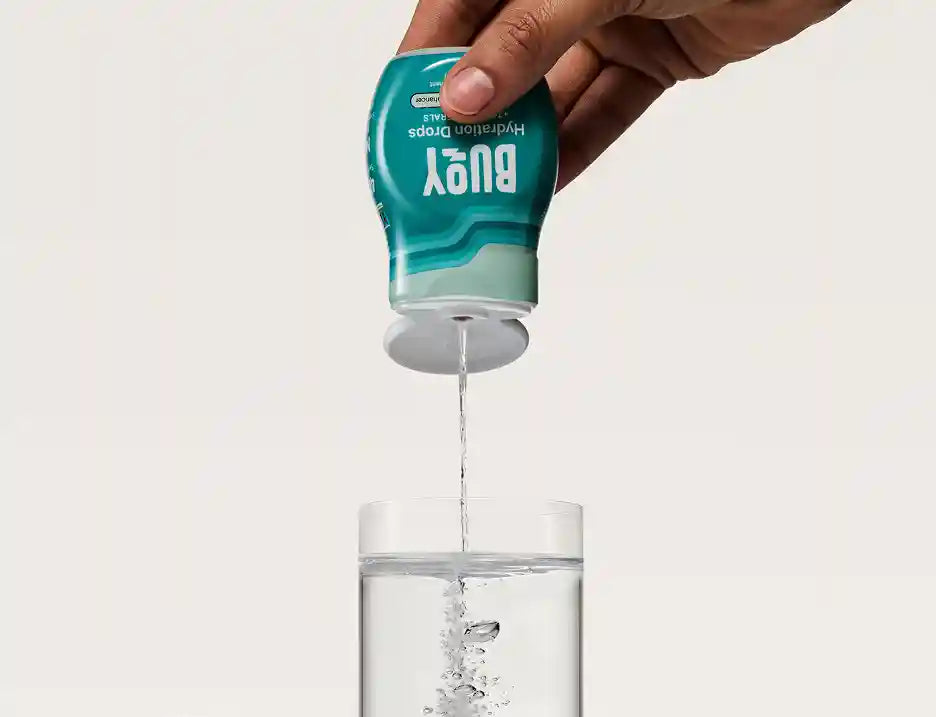
Buoy Hydration Drops are a hydration game-changer. Infused with a spectrum of fast-absorbing electrolytes, they turn any drink into a superior source of hydration. The results? You feel rejuvenated, your body stays balanced, and you get a rush of calm energy.
Learn More About Hydration Drops
Energy Drops
If you're someone who wants to maintain high energy levels, Buoy Energy Drops are made for you. Packed with electrolytes and essential nutrients, they enhance your energy levels while keeping you hydrated.
Immunity Drops
Imagine enhancing your body’s immune defenses with every sip. That's exactly what Buoy Immunity Drops do. They infuse your drink with immune-boosting ingredients, helping your body keep illness at bay.
But hey, why stop at one when you can have them all? The Buoy Daily Wellness Bundle packs all three hydrating wellness drops in one convenient package. It's the ultimate solution for those looking to upgrade their wellness routine. Not only will you stay hydrated but also energize and protect your body with every sip.
So let's raise a toast to the new and improved version of water, one that not just quenches your thirst but fuels your wellness journey. Here's to water, electrolytes, and a life brimming with vitality—just add Buoy!

Maintaining a proper balance of water and electrolytes in our body is paramount to our overall health and performance (3). While the water we regularly consume does contain some electrolytes, it's often not enough to meet our body's needs, especially under strenuous conditions (1).
That's where Buoy Wellness Drops come into play, providing an easy and efficient way to enhance hydration, energy levels, and immunity. Let Buoy Wellness Drops transform your everyday glass of water into a powerful tool for health and wellness. Harness the power of water, electrolytes, and Buoy to fuel your journey toward optimal vitality.
Are you ready to take the first step towards optimal vitality? Try Buoy Wellness Drops today, and experience the power of proper hydration!
FAQs
Does all water have electrolytes?
Most natural water sources contain at least some electrolytes, but the amount can vary a lot. Tap water, well water, and many bottled spring waters usually have small amounts of minerals like calcium, magnesium, sodium, and potassium. Purified or distilled waters have had most minerals removed, so they contain very few electrolytes. If you mostly drink highly filtered or distilled water, you may not be getting as many electrolytes from your water as you think.
Does regular or plain water have enough electrolytes for daily use?
For low to moderate activity and a balanced diet, regular water often works well as part of your overall hydration pattern. You still get most of your electrolytes from food, especially fruits, vegetables, dairy, nuts, and seeds. Plain water supports fluid balance while those foods provide minerals. When you start sweating more, training longer, or spending long hours in the heat, it can help to add electrolytes to your water so you are replacing both fluid and minerals at the same time (1)(4).
What water has the most electrolytes?
Mineral and some spring waters tend to have more electrolytes than purified or distilled water. These waters often list calcium, magnesium, sodium, and sometimes potassium on the label, so you can compare brands. Well water can also be high in certain minerals, depending on the local geology. If you prefer the taste and flexibility of plain water but want more control over your electrolyte intake, adding a product like Buoy Hydration Drops lets you create water with electrolytes in it, at the strength that feels best for you.
Why add electrolytes to water if water already has some?
The small amount of electrolytes in many water sources can help, but it is not always enough to match what you lose through sweat, long workouts, or illness (1)(4). Adding electrolytes to water is a way to fine tune your intake so it keeps pace with your lifestyle. It also helps you avoid overdoing plain water alone in situations where dilution of blood sodium could become an issue. Electrolyte enhanced water is not meant to replace healthy food, but it can be a simple tool that supports hydration and overall balance.
Does water give you potassium and other electrolytes by itself?
Water can contribute to your daily intake of potassium, magnesium, calcium, and sodium, but usually in modest amounts. The total depends on your local water supply and whether you drink tap, well, mineral, or purified water (1)(2). Think of water as providing a steady background level of minerals. Food and, when needed, added electrolytes do the rest. If you know your water is very low in minerals or you are in a high loss situation, using electrolyte drops is a practical way to make sure your fluid intake also supports your electrolyte needs.
References:
- Popkin, B. M., D'Anci, K. E., & Rosenberg, I. H. (2010). Water, Hydration and Health. Nutrition Reviews, 68(8), 439–458. Retrieved from https://www.ncbi.nlm.nih.gov/pmc/articles/PMC2908954/
- Healthline. (2019). Electrolytes: Functions, Imbalance, and Sources. Retrieved from https://www.healthline.com/nutrition/electrolytes
- Koeppen, B. M. (2009). The kidney and acid-base regulation. Advances in Physiology Education, 33(4), 275–281. Retrieved from https://journals.physiology.org/doi/full/10.1152/advan.00054.2009
- Shirreffs, S.M., et al., 2004. Fluid and Electrolyte Needs for Preparation and Recovery from Training and Competition. Journal of Sports Sciences, 22(1), pp. 57–63. Retrieved from https://www.tandfonline.com/doi/abs/10.1080/0264041031000140572