How Do You Prevent Dehydration When Flying? Sugar-Free Electrolytes for Travel
Dry skin, a scratchy throat, and a headache by the time you land aren't just "part of flying." They're signs your body lost more fluid than usual, and airplane cabins are built in a way that makes that almost unavoidable without a plan.
Cabin air typically sits at 10 to 20% humidity, compared to the 30 to 60% most people are used to indoors. That dry air pulls moisture out of your skin and lungs faster than normal. Cabin pressure is usually kept at a level equivalent to being at 6,000 to 8,000 feet of elevation.
Add hours of sitting still, and you might end up dehydrated before you've even landed. See what actually helps, where electrolytes for travel fit in, and how much water you really need per hour in the air.
Understand Why Flying Dehydrates You Faster Than a Normal Day
Know How Much to Drink Before, During, and After a Flight
See Where Electrolytes Actually Outperform Water Alone
Pack Smart Without Running Into TSA Liquid Limits
Hydrates 64% Better*View Clinical Study
Hydrates 64% Better*
View Clinical Study
Why Flying Dehydrates You Faster
Several things happen at once on a flight that don't happen during a normal day on the ground.
Factor
On the Ground
In the Air
Humidity
Typically 30–60%
Often 10–20%
Air pressure
Sea level
Equivalent to roughly 6,000–8,000 ft elevation
Water loss through skin and breathing
Baseline rate
Can more than double as humidity drops
Movement
Regular
Hours of sitting still
Resting water loss through breathing and skin can rise from around 160 mL per hour to 360 mL per hour as humidity drops from 60% to 12%, which is close to what a typical cabin looks like.
How Do You Prevent Dehydration When Flying? Step by Step
Preventing dehydration when flying involves a combination of timing, fluid choice, and a few habits worth building before you even get to the gate.
When
What to Do
24–48 hours before
Increase water intake gradually so you start the trip already hydrated.
At the airport
Fill an empty water bottle after security instead of buying a small one.
During the flight
Drink consistently rather than waiting until you feel thirsty.
During the flight
Limit alcohol, which increases urination and worsens fluid loss.
After landing
Rehydrate again, especially if you're heading into a hot or humid climate.
How Much Water Should You Drink on a Flight?
The often-cited guidance from the Aerospace Medical Association is about 8 ounces of water per hour in flight. Some researchers argue that's actually on the low side for longer flights, and suggest 100 to 300 mL per hour (roughly 3.4 to 10 ounces) is a more realistic target.
Electrolytes for Travel: Do They Actually Help More Than Water?
Water matters most, but it's not the whole story. One study of volunteers resting at simulated high altitude for 12 hours found that a high-sodium drink preserved blood volume better than plain water did. The reasoning is straightforward: sodium helps your body hold onto the fluid you drink instead of losing more of it through urination.
This is the same basic mechanism behind why electrolyte drinks tend to outperform water alone during long flights. If you want a deeper look, learn more about electrolytes for travel and hydration.
Packing Electrolytes for a Flight Without TSA Issues
Liquids in carry-on bags are limited to 3.4 ounces (100 mL) per container under TSA rules. Because Buoy's drops are concentrated, a small bottle goes a long way. When in doubt, packing it in checked luggage avoids the question entirely.
How to Prevent Dehydration When Flying: Buoy Hydration Drops
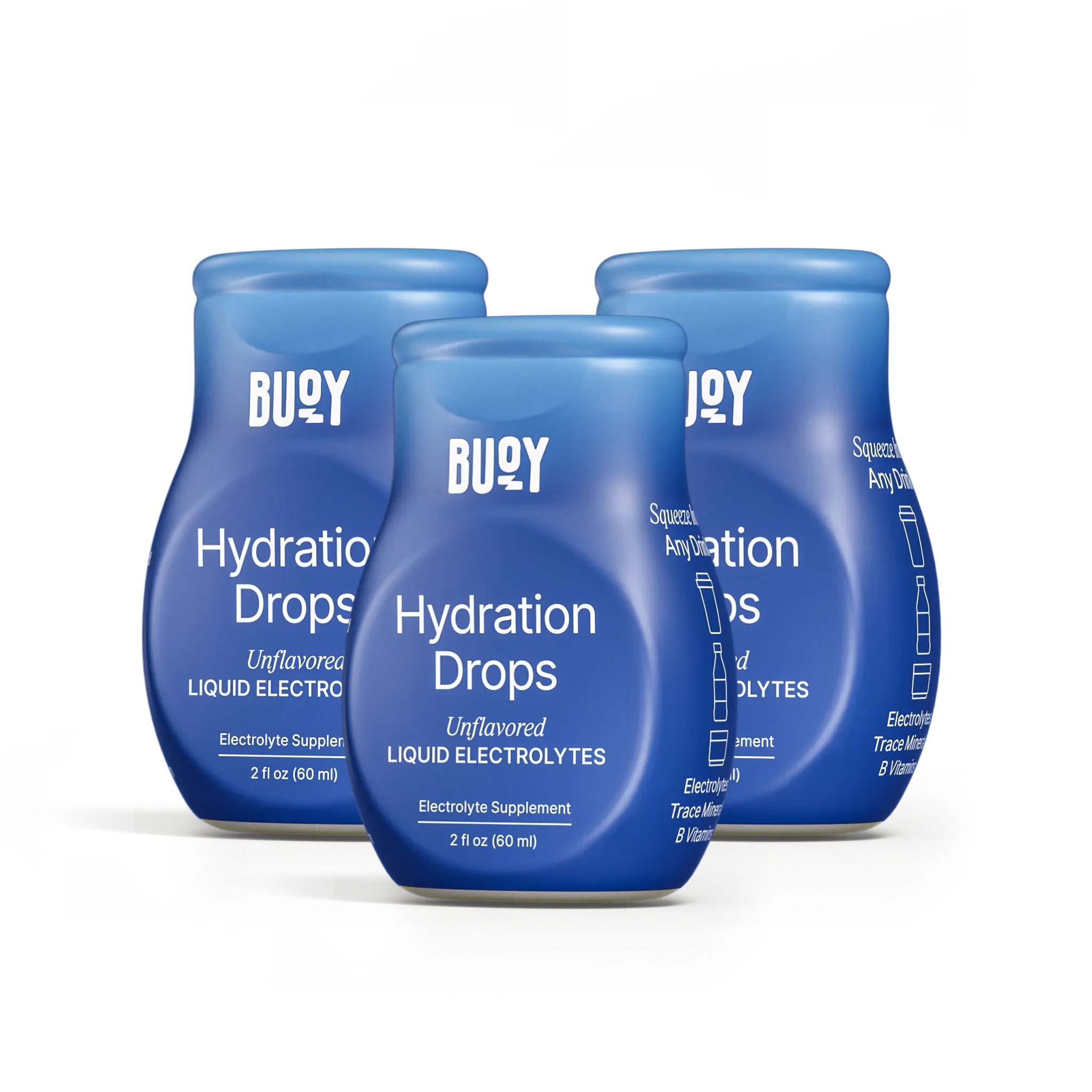
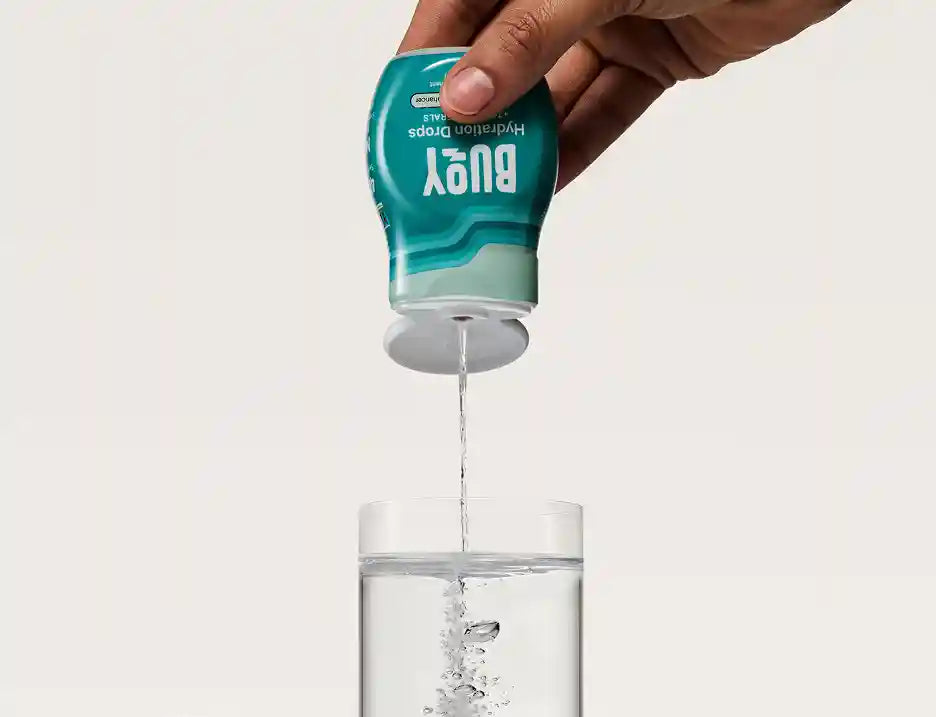
Because Buoy's electrolyte drops are unflavored and don't require mixing a full glass, they're easy to add to whatever water you already have in hand.
Buoy Hydration Drops work well as your everyday travel formula, for regular flights and typical trip-length hydration needs.
✓ Zero sugar, zero artificial sweeteners ✓ 87+ trace minerals to support fluid retention ✓ Backed by a university-led clinical hydration study ✓ Small enough to bring along without hassle
Buoy Rescue Drops for Extra Hydration
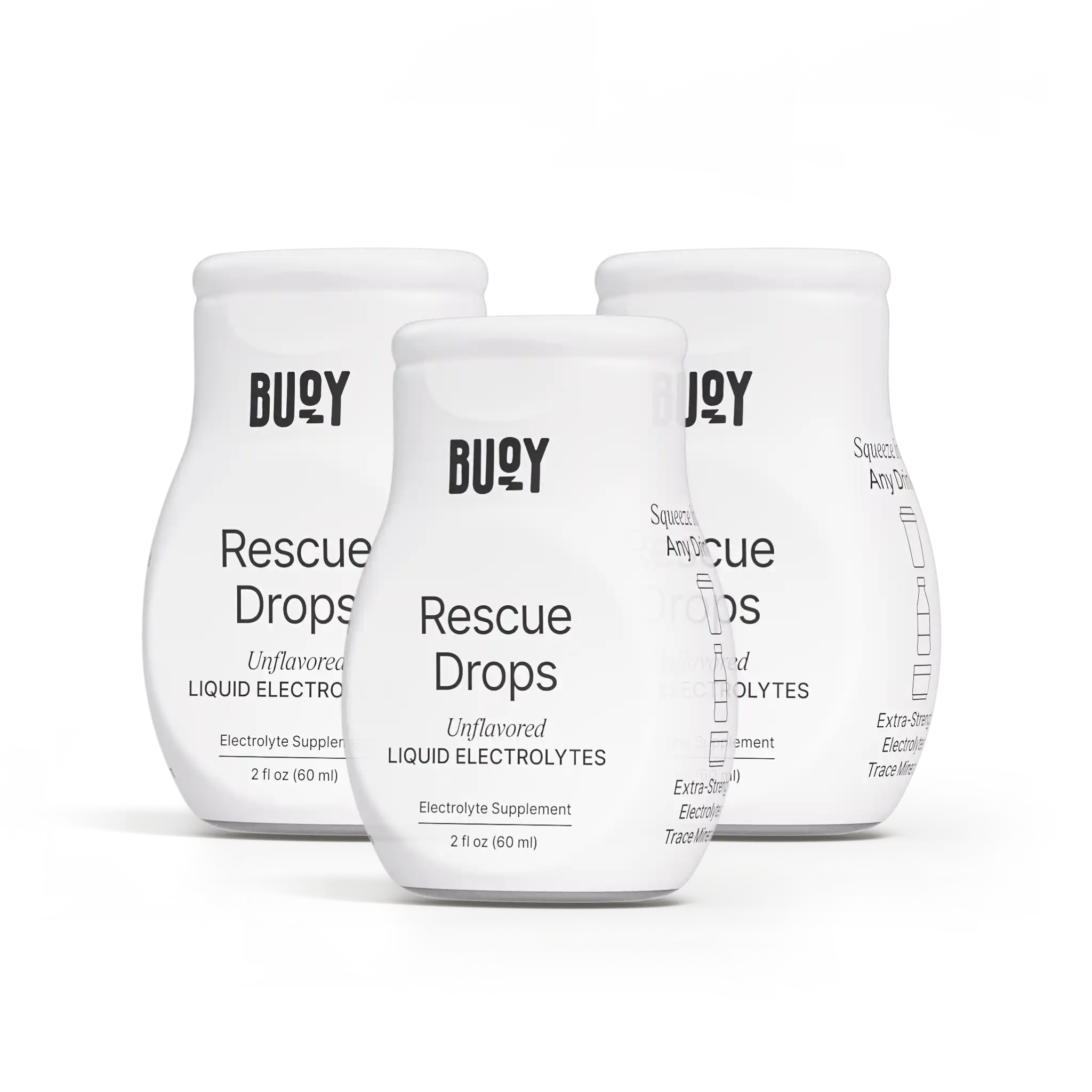
For long-haul flights, multiple connections, or arriving somewhere hot and humid, Buoy Rescue Drops offer a higher-sodium formula built for heavier fluid loss.
300 mg of sodium per serving
Formulated for situations with greater fluid loss than a typical day, like travel
Completely sugar-free, sweetener-free, and unflavored
6x stronger than Buoy's standard electrolyte formula
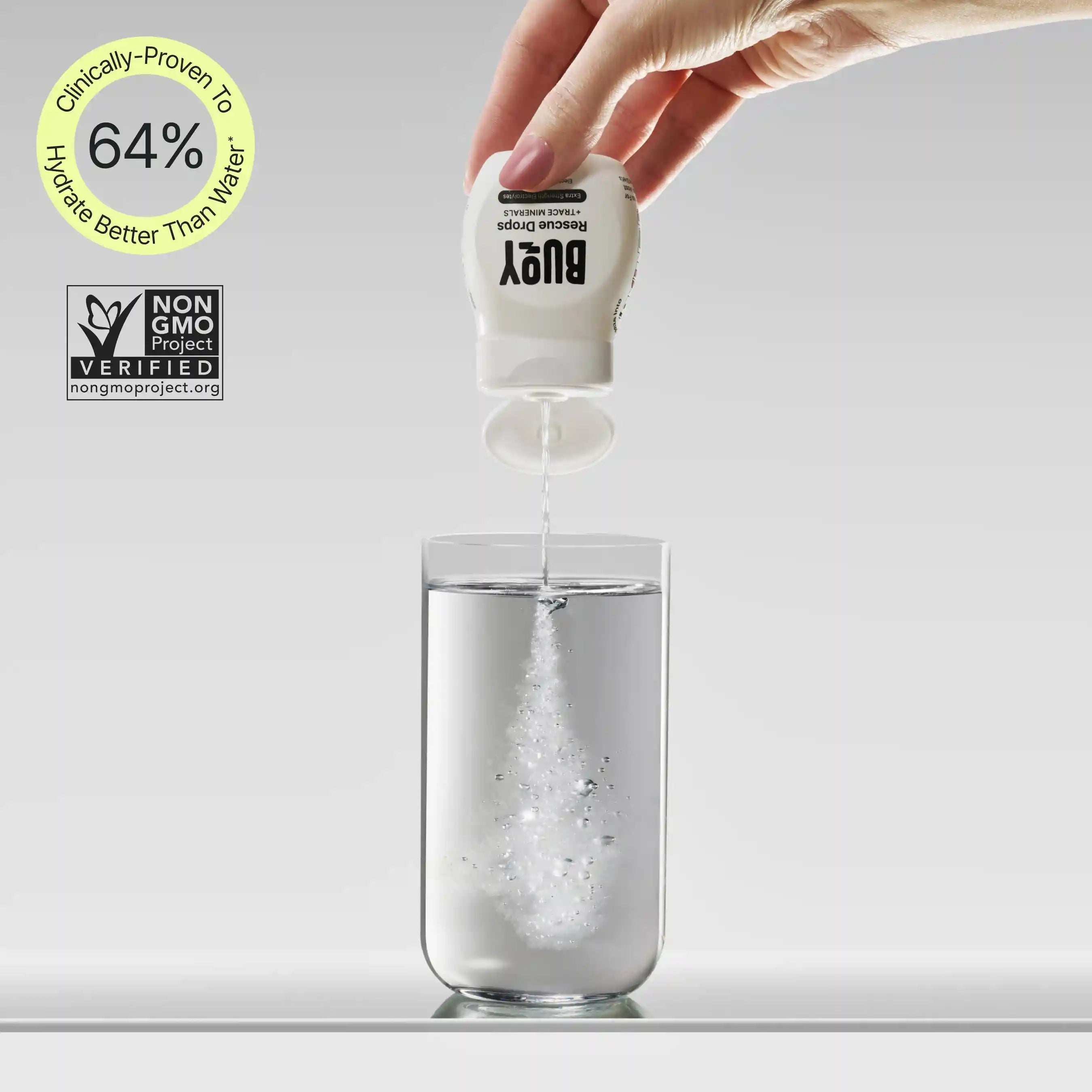
Buoy's hydration performance is clinically proven, hydrating 64% better than water alone and 49% better than a leading electrolyte competitor.
Why Buoy Beats a Typical Travel Electrolyte Packet
A lot of travel electrolyte packets you'll find at the airport or a pharmacy are flavored, and that flavor usually comes with added sugar.
Feature
Buoy Hydration Drops
Typical Travel Electrolyte Packets
Sugar
0g
Often 4–10g per packet
Format
Small liquid drops
Powder packet requiring a full glass of water
Flavor/dye
None
Common
Fits in a pocket or small bag
Yes
Usually, but still requires mixing
Wondering if hydration multipliers work? Take a look at the benefits of electrolytes, designed to help support fluid absorption.
How to Use Buoy on Your Next Flight
Add one squeeze of Buoy Hydration Drops to your water bottle before you board.
Refill and re-dose every few hours during longer flights.
Switch to Buoy Rescue Drops for long-haul or multi-leg trips with heavier fluid loss.
Keep using it for a day or two after landing, especially in a hot or humid destination.
Because both formulas are unflavored, they work in whatever you're already drinking.
How Buoy's Sugar-Free Electrolytes Stack Up
Compare Buoy with leading competitors:
No Sugar, Sweeteners
87 Trace Minerals
Harvested Salt Source
Bioavailable
Clinical Study
Add To Any Drink
Cost Per Serving
Highly
$0.25
Low
$1.53+
Flying and Chronic Illness: Why Dehydration Hits Harder
For people managing a condition involving orthostatic intolerance, flying can be a particularly rough combination. Hours of sitting still and cabin pressure changes can make dehydration hit all at once, which makes standing up after a long flight noticeably harder.
Buoy's Chronic Illness Support Program is built for exactly this kind of ongoing need, travel or not.
35% off for life
Approval in about 2 minutes
Covers POTS, dysautonomia, ME/CFS, Long COVID, IBS, autoimmune disorders, and 20+ other chronic conditions
Frequently Asked Questions About How to Prevent Dehydration When Flying
How do you prevent dehydration when flying?
Start hydrating in the 24 to 48 hours before your flight, and bring an empty water bottle to refill after security. Also, make sure to drink consistently throughout the flight instead of waiting until you're thirsty. Limiting alcohol and using an electrolyte drink alongside water can help your body actually retain the fluid you're drinking. Cabin air pulls moisture out of your body faster than normal.
How much water should I drink on a flight?
A commonly cited guideline is about 8 ounces per hour in flight. Some research suggests up to 100 to 300 mL (roughly 3.4 to 10 ounces) per hour may be more appropriate for longer flights. The safest approach is drinking steadily throughout the flight rather than a large amount all at once.
Do electrolytes help more than water when flying?
Water is essential, but sodium helps your body hold onto the fluid you drink rather than losing more of it through urination. One study found that a sodium-containing drink preserved blood volume better than water alone during extended time at altitude.
Why does flying dehydrate you so much?
A few things happen at once:
Cabin humidity drops to 10-20% compared to the 30-60% most people are used to.
Cabin pressure sits at a level similar to being at 6,000-8,000 feet elevation.
You're sitting still for hours.
Together, these can more than double how much water your body loses just through breathing and skin.
Can you bring electrolyte drops through airport security?
Liquids in a carry-on are limited to 3.4 ounces (100 mL) per container under TSA rules. Since electrolyte drops are concentrated, a small bottle typically fits well within that limit. However, it's worth checking the specific size before packing it in your carry-on.
Should I avoid coffee before a flight?
Coffee doesn’t necessarily need to be avoided if you drink it regularly. That’s because the research suggests moderate caffeine doesn't meaningfully worsen hydration for people who drink it habitually.
What are signs of dehydration during a flight?
A few common signs include:
Dry mouth or noticeably chapped lips
Headache
Fatigue beyond what the flight itself would explain
Dizziness when standing up after landing
Dark yellow urine
If symptoms are severe, especially dizziness, confusion, or a rapid heartbeat, that's worth medical attention rather than just more water.
What's the best electrolyte for a long-haul flight?
A higher-sodium formula tends to be the better fit for long-haul or multi-connection travel, since fluid loss adds up over more hours in dry, pressurized cabin air. Buoy's Rescue Drops deliver 300 mg of sodium per serving, built for exactly that kind of extended fluid loss.
“Electrolyte boost without any sweetness whatsoever.”
“Electrolyte boost you can add to coffee, tea, and even alcohol.”
“Drops supply calming energy and immune support.”
“Purposefully unflavored which means sugar-free, stevia, and sweetener-free.”
“Many of the 87 trace minerals in Buoy aren’t found in the conventional diet.”
“Anti-bloat liquid electrolyte drops."
“Buoy help broaden understanding of chronic illness.”
The world's first unflavored functional beverage additive.
“Buoy is also third-party tested, which isn’t common for electrolytes.”
Real People, Real Health Journeys
Choosing a selection results in a full page refresh.