







The Best Hydration Routine to Support Migraine Prevention
Hydration is one of the most talked-about migraine triggers for a reason: when you’re under-hydrated, your body and nervous system often has less “buffer” against other stressors. But “drink more water” isn’t a very helpful plan, especially if you only remember to hydrate once you already feel off.
Key Takeaways
- Dehydration is a commonly reported migraine trigger and can lower your migraine threshold.
- Hydration works best when it’s spread throughout the day, not “caught up” at night.
- Electrolytes support effective hydration by helping the body retain and use fluids.
- Increasing daily water intake has shown benefits for some people with recurrent headaches.
- Migraine can include nausea and vomiting, which can make hydration harder and more important.
A migraine-aware hydration routine focuses on timing, consistency, and electrolyte balance, not just total ounces. Hydration won’t cure migraine, but keeping your baseline steadier may help reduce how often your threshold gets crossed.¹
- Why Dehydration Can Be a Migraine Trigger
- Hydration Isn’t Just Water: Why Electrolytes Matter
- A Simple Daily Hydration Routine for Migraine Prevention
- Hydration Timing: What to Do on High-Risk Days
- How to Tell If Hydration Might Be Part of Your Pattern
- How Rescue Drops Fit Into a Migraine-Aware Hydration Routine
- When to Talk to a Doctor
- Build a Hydration Routine Your Migraine Brain Can Rely On
Why Dehydration Can Be a Migraine Trigger
Migraine is a neurological condition influenced by many factors, including sleep, stress, hormones, meals, sensory load, and hydration.¹ When you’re dehydrated, your body has to work harder to maintain circulation and normal nerve signaling. That added strain can make the nervous system more reactive and leave less room for other triggers.
The key idea is the threshold model: dehydration rarely acts alone. More often, it stacks with a short night of sleep, a skipped meal, or a high-stimulation day and makes a migraine more likely.¹
Hydration Isn’t Just Water: Why Electrolytes Matter
Hydration isn’t only about how much water you drink; it’s also about whether your body can retain and distribute that water effectively. Electrolytes (like sodium, potassium, magnesium, calcium, and chloride) help regulate fluid movement and support normal nerve and muscle function.⁴
In simple terms: if you’re consistently “behind,” chugging plain water all at once may not feel as effective as a steadier approach that includes electrolyte support, especially on days with heavy sweating from excessive activity, heat exposure, illness, or reduced appetite.⁴
A Simple Daily Hydration Routine for Migraine Prevention
This routine is intentionally simple. Rather than perfection, the goal is to avoid big swings (very little fluid early, then a lot late).
Morning (Within 30–60 Minutes of Waking)
Most people wake up somewhat dehydrated because you go hours without drinking and lose water through breathing and sweat overnight.⁴
- Start with a full glass of water soon after waking
- If mornings are a common migraine window for you, make this step non-negotiable
Late Morning
This is where many people unintentionally fall behind (especially if coffee replaces water).
- Aim for small, steady sips rather than “waiting until thirsty”
- If you tend to forget, tie hydration to something you already do (after your first meeting, after a walk, etc.)
Afternoon
Afternoons can be a common threshold-lowering window due to screen time, stress, and long gaps between meals.
- Continue steady fluids
- If you notice afternoon headaches or fatigue improve with hydration, that’s a useful pattern to track
Evening (Support Recovery Without Disrupting Sleep)
Hydrating late is better than not hydrating at all, but chugging a large amount right before bed can disrupt sleep, which also affects migraine risk.¹
- Focus on spacing your fluids earlier
- Keep evening hydration moderate and comfortable
Hydration Timing: What to Do on High-Risk Days
Some days require a different strategy, either because fluid loss is higher or replacing fluids is harder.
High-risk days may include:
- Hot weather or heavy sweating
- Travel (especially flights)
- Exercise days
- Illness or stomach upset
- High-stimulation days (bright lights, long screen time, stress)¹
On these days, consider a micro-dose approach:
- Smaller, more frequent sips
- Add electrolyte support earlier rather than waiting until you feel depleted⁴
If you’re nauseated, cold fluids can be harder to tolerate, so room temperature sips may feel easier.¹
How to Tell If Hydration Might Be Part of Your Pattern
You don’t need to measure everything perfectly. A few practical signals can help you identify whether hydration is part of your migraine pattern:
- Darker urine color than usual
- Feeling thirsty or “dry” (mouth, lips)
- Fatigue or brain fog that improves after fluids
- Headaches that appear after long gaps without drinking⁴
A simple diary can be especially helpful: track migraine timing alongside sleep, meals, stress, and approximate fluid intake.¹ Even a few weeks of notes can reveal repeatable patterns.
How Rescue Drops Fit Into a Migraine-Aware Hydration Routine
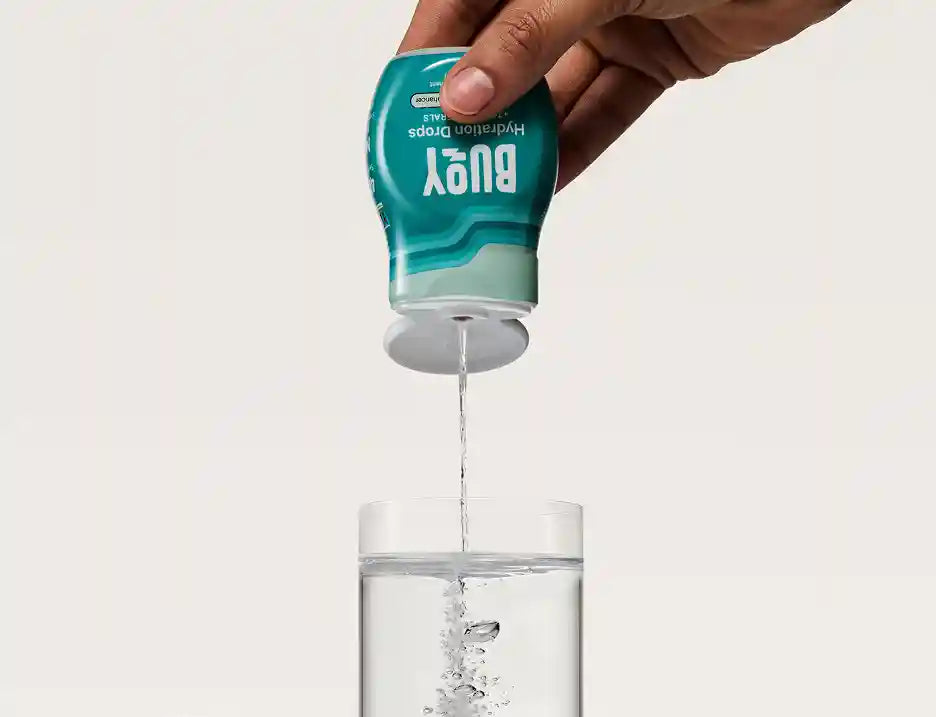
For times when you’re significantly depleted, like after heavy sweating, heat exposure, illness, travel, or a flare-prone day, Rescue Drops are designed as Buoy’s most concentrated electrolyte option.
Rescue Drops are positioned for intense depletion and rapid recovery, providing a higher-sodium electrolyte profile to support hydration when water alone may not feel sufficient. They’re a simple add-in to your beverage routine and can be used preventively on high-risk days or when you’re working to restore balance.
Rescue Drops are not a treatment for migraine, but they can support hydration and electrolyte balance as part of a migraine-aware routine.
When to Talk to a Doctor
Hydration strategies can be helpful, but medical evaluation matters when symptoms change or become severe. Talk to a clinician if:
- Headaches are increasing in frequency or severity
- Your migraine pattern changes suddenly
- You have new neurological symptoms
- You can’t keep fluids down due to persistent vomiting¹
Migraine deserves comprehensive care. Hydration is one piece of the picture, not the whole plan.
Build a Hydration Routine Your Migraine Brain Can Rely On
Hydration for migraines works best when it’s steady and realistic, not reactive. By drinking earlier in the day, using electrolytes when appropriate, and adjusting on high-loss days, you can support a more stable baseline. If you’re prone to intense depletion, Rescue Drops can fit into that routine as a practical way to support hydration and electrolyte balance when you need it most.
References
¹ National Institute of Neurological Disorders and Stroke. (n.d.). Migraine. National Institutes of Health. https://www.ninds.nih.gov/health-information/disorders/migraine
² American Migraine Foundation. (n.d.). Top 10 migraine triggers and how to deal with them. https://americanmigrainefoundation.org/resource-library/top-10-migraine-triggers/
³ Spigt, M., Weerkamp, N., Troost, J., van Schayck, C. P., & Knottnerus, J. A. (2012). A randomized trial on the effects of regular water intake in patients with recurrent headaches. Family Practice, 29(4), 370–375. https://academic.oup.com/fampra/article-abstract/29/4/370/492787?redirectedFrom=fulltext
⁴ Popkin, B. M., D’Anci, K. E., & Rosenberg, I. H. (2010). Water, hydration, and health. Nutrition Reviews, 68(8), 439–458. https://academic.oup.com/nutritionreviews/article-abstract/68/8/439/1841926?redirectedFrom=fulltext