







Overcoming Energy Dips by Understanding the Science of Fatigue
Fatigue isn’t just about willpower. It’s a physiological process, influenced by hydration, nutrition, nervous system signals, and even your mineral levels. When something is off in that chain, your energy output takes a hit.
Essential Takeaways
Fatigue is more than just feeling tired. It’s a combination of brain signals, stress responses, and nutrient depletion that can wear you down.
- Lifestyle habits like hydration, nutrition, and sleep directly affect your energy levels and how your body produces and uses fuel.
- Energy Drops support your natural energy production with green tea caffeine, l-theanine, electrolytes, and no artificial junk.
Everyone hits a wall now and then. Sometimes it’s mid-morning, other times it’s right after lunch. Maybe it sneaks up on you halfway through a meeting or during your commute home. Whatever form it takes, that sluggish, foggy feeling isn’t always about how much sleep you got. It’s often about how your body manages and uses energy - on a much deeper level.
This post unpacks what’s actually happening in your body when fatigue strikes and explores how natural energy boosters like Energy Drops support sustainable energy without harsh crashes or synthetic stimulants.
- What Energy Dips Actually Are
- What’s Really Happening When Your Energy Drops
- Hydration Patterns That Make Midday Fatigue Worse
- Common Causes of Midday Energy Dips
- How Energy Production Actually Works
- Why Your Brain Gets Tired (Even When Your Body Doesn’t)
- Nutrient Depletion: The Hidden Factor Behind Fatigue
- Signs Your Body Is Running Low On Energy
- The Problem with Most Energy Supplements
- How Electrolytes Support Steady Energy
- What a Real Energy Boost Should Feel Like
- Building Energy Habits That Actually Work
- How To Prevent Energy Dips Throughout The Day
What Energy Dips Actually Are
Energy dips are short periods where your alertness, focus, or physical stamina suddenly decrease. Most people notice them mid-morning, mid-afternoon, or after a heavy meal. They often show up as a mix of physical tiredness and reduced mental clarity. They are not always connected to how much sleep you got the night before.
Common signs include:
- slower thinking
- brain fog
- yawning
- irritability
- trouble concentrating
- heavy limbs
- a feeling that your body has shifted into low power mode
These dips happen when your body does not have enough hydration, nutrients, or nervous system support to create steady energy. Mild dehydration alone has been shown to affect mood, focus, and perceived fatigue [1][2][3]. When hydration and mineral balance are low, the brain and muscles receive less efficient support, which makes dips more likely.
What’s Really Happening When Your Energy Drops
Fatigue can feel like a mystery. One day you're sharp and focused, the next you're dragging your feet by 10 a.m. But underneath the surface, it's usually a sign that something is misfiring in your energy production system.
Your body runs on a fuel system powered by ATP (adenosine triphosphate), which your cells generate from the food you eat. This process requires nutrients, hydration, and proper hormonal signalling. When even one part of that cycle is strained -like not drinking enough water, not getting enough magnesium, or skipping breakfast - your energy output drops.
There’s also a mental component. Stress and overstimulation tax your nervous system, leading to mental fatigue. That “brain tired” feeling isn’t about muscles - it’s about neurotransmitters and nervous system overload. When your brain starts slowing down, so does everything else.
Low electrolytes can also play a role. Sodium, potassium, and magnesium help regulate fluid balance, nerve transmission, and ATP activity, which powers your cells [5][6][7]. When minerals drop, the body has a harder time moving water into cells and supporting energy production. Even mild shifts in sodium balance can influence how efficiently the brain and body function during the day [7].
Hydration habits matter too. Research shows that many adults do not consistently meet their daily fluid needs [4]. When you drink most of your water late in the day or rely mainly on coffee, your cells may not receive steady hydration support early enough to maintain energy output.
Hydration Patterns That Make Midday Fatigue Worse
A few hydration habits create perfect conditions for energy dips.
-
Starting the day dehydrated: You naturally lose water overnight. Without morning hydration, your body begins the day already behind, which affects alertness and energy from the first hour of your day [1][2].
-
Relying on coffee instead of water: Caffeine without fluids first can make dehydration symptoms feel more noticeable, especially if you already woke up low on water.
-
Long gaps without drinking: If you go several hours between fluids, your blood volume and cognitive performance can decrease, increasing the likelihood of an energy slump [1][3].
- Drinking plain water without minerals: Water needs electrolytes to move through the body efficiently. When electrolyte intake is consistently low, hydration is less effective and energy can dip more easily [5][6].
Common Causes of Midday Energy Dips
There’s no single cause of fatigue, but there are a few repeat offenders that tend to show up for most people.
-
Dehydration is one of the biggest. Losing just a small percentage of your body’s water can slow down cognitive performance and physical endurance. Your body needs electrolytes (like sodium, potassium, and magnesium) to hold onto water and get it where it’s needed.
- Blood sugar crashes are another. When you eat something high in refined carbs or sugar, your energy spikes - and then crashes when insulin sweeps it all out of your bloodstream. The result? Sluggishness and hunger, often followed by more snacking and more crashing.
-
Caffeine crashes happen when the energy spike from coffee or synthetic caffeine wears off. This is usually made worse when there’s no nutritional support backing it up.
- Lack of movement can play a role, too. Sitting still for long periods signals your brain to conserve energy, which can make you feel sleepier even if you’re not physically tired.
-
Post-meal tiredness is another common trigger. When you eat a meal high in refined carbohydrates, blood sugar rises quickly and then drops as insulin responds. This dip contributes to sluggishness, fogginess, and loss of focus. Digestion also diverts more blood flow to the gut, which can make the afternoon slump feel even heavier.
-
Light exposure matters as well. If you spend the first half of your day indoors, your circadian rhythm may not receive the signals it needs to maintain alertness.
-
Sleep quality also plays a role. Even if you sleep enough hours, fragmented or shallow sleep can reduce daytime energy and increase the likelihood of dips.
Energy Drops were designed to tackle these issues with ingredients that support hydration, calm mental focus, and smooth out the energy curve.
How Energy Production Actually Works
To understand energy dips, it helps to know how your body creates energy in the first place. Your mitochondria (the power plants of your cells) take nutrients like glucose, fat, and protein and convert them into ATP. This process needs a steady supply of oxygen, minerals, and vitamins to run efficiently.
Magnesium is crucial here. It helps convert food into energy, regulate nerve function, and support muscle movement. If you're low on magnesium, your cells have a harder time doing their job - which makes you feel like you’ve hit a wall.
Hydration plays a huge part too. Water helps transport nutrients into cells and remove waste. Electrolytes help the body hold on to water and make sure those cells can fire properly.
The ingredients in Energy Drops are all about supporting that natural system: green tea caffeine for mental energy, l-theanine to smooth it out, and ocean-derived electrolytes to help your body stay hydrated and alert.
Electrolytes also help support ATP production. Minerals like magnesium assist enzymes that convert food into usable energy [6]. When hydration or mineral levels are low, mitochondria cannot produce ATP as efficiently, which contributes to feelings of fatigue.
Hydration supports oxygen delivery as well. When fluid levels drop, blood volume decreases, which may reduce the oxygen and nutrients delivered to cells that power your muscles and brain [1][2].
Why Your Brain Gets Tired (Even When Your Body Doesn’t)
Fatigue isn’t always physical. Sometimes your muscles feel fine, but your focus is gone. You reread the same sentence five times. You forget what you were doing. That’s mental fatigue - and it’s often harder to shake than physical tiredness.
Mental fatigue is triggered by too much input and not enough recovery. When your brain is juggling too many tasks, processing endless notifications, or stuck in decision-making mode all day, it starts using up more neurotransmitters than it can replenish.
Caffeine helps, but not all caffeine is created equal. Green tea caffeine, paired with l-theanine, gives your brain a focused energy lift without overstimulating it. That’s why the energy boost from Energy Drops feels calmer and more stable than coffee or energy drinks. It supports cognitive endurance, not just alertness.
Mild dehydration can also affect attention, working memory, and mood [1][2][3]. When mineral balance or hydration drops, nerve cells fire less efficiently. This contributes to fogginess, slower recall, and mental fatigue, even if your body feels rested.
Nutrient Depletion: The Hidden Factor Behind Fatigue
When you're constantly busy, your body burns through nutrients faster. Stress, hard workouts, long hours, poor sleep - they all deplete your stores of key minerals and B vitamins. If you're not actively replenishing them, your tank gets low.
B vitamins help with everything from breaking down carbs into usable energy to supporting brain function and hormone balance. Minerals like potassium, magnesium, and sodium help your muscles and nerves work properly. Without them, your energy systems start misfiring.
Energy Drops include bioavailable trace minerals that get absorbed quickly without having to be broken down by your gut. They’re also sugar-free, which means no crash - and they won’t interfere with your hydration or blood sugar balance.
Signs Your Body Is Running Low On Energy
You can often feel energy depletion before a full dip hits. Common early signs include:
- difficulty focusing
- irritability
- slower reaction time
- mild headache
- reduced motivation
- cravings for sugar or caffeine
These symptoms happen when your body is struggling to maintain stable energy output. They can signal low minerals, dehydration, blood sugar fluctuations, or mental overwork.
The Problem with Most Energy Supplements
Most energy drinks and pre-workout formulas are built around one thing: the spike. They pump you full of sugar and caffeine, give you a quick burst, and then leave you drained.
That model doesn’t work for daily energy support. It taxes your adrenals, crashes your blood sugar, and leaves you needing more of the same thing to feel normal.
Energy Drops skip the sugar and the artificial ingredients. They’re built to work with your body’s existing systems - not override them. You get clean caffeine from green tea, calming focus from l-theanine, and hydration support from electrolytes. It’s energy that doesn’t backfire.
How Electrolytes Support Steady Energy
Electrolytes support the nervous system, muscle function, and fluid balance. Sodium helps regulate fluid movement, potassium supports nerve signaling, and magnesium assists in ATP production [5]. When levels dip, you can feel more tired, foggy, and less mentally sharp.
Electrolytes also help your hydration work better. Without them, water passes through the system less efficiently, which reduces how effectively it supports cognition and physical energy.
What a Real Energy Boost Should Feel Like

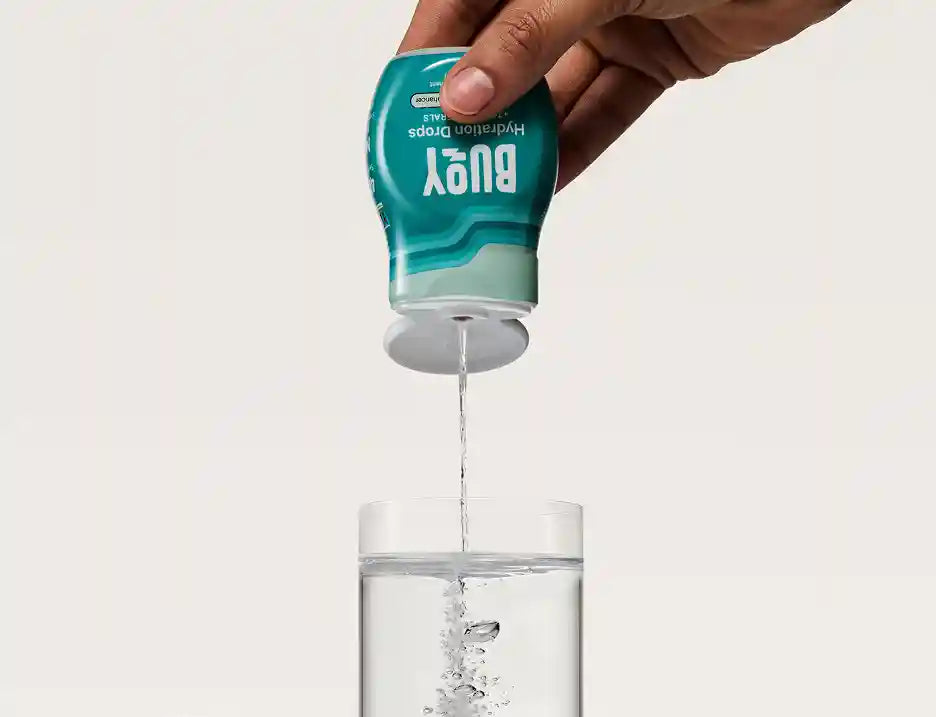
A simple squeeze of Buoy Energy Drops turns your water into a clean, crash-free energy boost perfect for staying sharp and hydrated throughout the day.
The best kind of energy isn’t explosive - it’s stable. It carries you through your day without peaks and valleys. You don’t need to bounce off the walls. You just want to feel alert, clear-headed, and able to focus on what matters.
That’s what Energy Drops are designed for. The green tea caffeine hits differently than coffee. It’s smoother and doesn’t come with digestive or acid issues. L-theanine balances out the stimulation so you stay mentally sharp without feeling overstimulated. The added electrolytes help you stay hydrated, which means better stamina across the board.
You can adjust the dose to your needs. A small squeeze for a light lift. More for sustained energy through longer tasks. No need to chug a sugary drink or load up on pills.
Blood sugar stability also plays a part. When you pair hydration with balanced nutrition and minerals, you support a steadier release of energy throughout the day.
Building Energy Habits That Actually Work
Supplements help, but they’re not magic. Long-term energy depends on your daily habits.
Staying hydrated, eating balanced meals, moving your body, and getting enough sleep form the base layer. Then come the smaller adjustments - supporting your body with fast-absorbing nutrients that fit into your life without disrupting it.
Energy Drops are one of those small habits that make a big difference. No prep, no sugar, no mess. Just a few drops in your water or tea to give your system what it needs to power through your day.
Fatigue doesn’t have to control you. When you understand how energy works and what your body actually needs, you can support yourself better and feel better too.
How To Prevent Energy Dips Throughout The Day
Small, consistent habits can make the biggest difference in avoiding midday slumps.
Try:
- drinking water with minerals in the first hour of your day
- pairing carbs with protein or healthy fats
- keeping a steady hydration rhythm instead of long gaps
- taking short movement breaks to support circulation
- choosing green tea caffeine paired with l-theanine for smoother focus [8][9]
These habits help you support mood, cognition, stamina, and focus throughout the day.
FAQs
Why do I feel tired after lunch?
Feeling tired after lunch is very common, and it does not automatically mean something is wrong. A big part of the slump comes from how your body processes food. Meals that are high in refined carbohydrates or sugars can cause a quick rise in blood glucose, followed by a noticeable drop as insulin responds. That swing alone can make you feel heavy, unfocused, or ready for a nap. Digestion also needs energy. Blood flow shifts toward the gut to help break down food, which can leave you feeling less alert for a short period. If you also started the day dehydrated or ate too quickly, the effect can feel even stronger. Pairing your lunchtime carbs with protein and staying hydrated can help keep this dip more manageable.
Can dehydration make you feel exhausted?
Yes. Even mild dehydration can influence how you feel throughout the day, and research shows that it can affect mood, attention, and perceived fatigue [1][2][3]. When your fluid levels drop, blood volume decreases slightly, which means your body has to work harder to circulate oxygen and nutrients. This can leave you feeling mentally flat or physically drained, even if you slept well. Dehydration also affects temperature regulation, which can add another layer of tiredness. If you regularly go long stretches without drinking water or rely mainly on coffee, you may hit dips in energy more often. Adding electrolytes can improve hydration efficiency and support better consistency in your energy levels.
Do electrolytes help with mental fatigue?
They can play an important role. Electrolytes like sodium, potassium, and magnesium support nerve function, hydration efficiency, and ATP production, all of which influence cognitive performance [5][6][7]. When electrolytes are low, nerve cells do not fire as efficiently, which can contribute to foggy thinking or slower mental processing. Proper mineral balance also helps water move properly through the body, which supports brain hydration. Mental fatigue often feels worse when hydration and mineral levels are slightly off, even if you do not feel physically thirsty. Supporting daily intake can help your brain maintain steadier focus and cognitive stamina.
Why do I feel tired even after a full night of sleep?
Tiredness after what should be a full night of rest can happen for many reasons. Hydration levels influence morning alertness because you naturally lose water overnight, and not replacing it early can leave you starting the day at a disadvantage. Nutrient depletion, especially low minerals or B vitamins, can also affect how restored you feel. Blood sugar imbalances, stress, and long periods of mental overload can reduce your daytime energy even when sleep duration is technically adequate. Mild dehydration alone has been shown to affect mood and cognitive performance [1][2]. Looking at hydration, minerals, and morning routines often reveals helpful fixes.
Why does caffeine sometimes make me more tired?
Caffeine can create tiredness after the initial lift wears off, especially when it is consumed without any nutritional or hydration support. A fast rise in alertness can be followed by a noticeable drop once the stimulant effect fades, which many people describe as a crash. If you are already dehydrated, that feeling can be stronger. Green tea caffeine paired with l-theanine provides a steadier cognitive lift and can reduce the crash effect by supporting smoother mental focus [8][9]. This combination is often tolerated better than coffee because it works with the nervous system in a gentler way while still supporting alertness.
References:
[1] Armstrong LE, et al. Mild dehydration and mood in healthy young women. Journal of Nutrition. 2012 - https://pubmed.ncbi.nlm.nih.gov/22190027/
[2] Masento NA, et al. Effects of hydration on cognitive performance. Nutrition Reviews. 2014. https://pubmed.ncbi.nlm.nih.gov/24480458/
[3] Szinnai G, et al. Influence of water deprivation on cognitive performance. American Journal of Physiology. 2005. https://pubmed.ncbi.nlm.nih.gov/15845879/
[4] Riebl SK, Davy BM. Hydration habits of adults. Nutrients. 2013. - https://pmc.ncbi.nlm.nih.gov/articles/PMC4207053/
[5] Institute of Medicine. Dietary Reference Intakes for Water, Potassium, Sodium, Chloride, and Sulfate. 2004. https://www.nationalacademies.org/projects/HMD-FNB-19-P-139/publication/10925
[6] Volpe SL. Magnesium and energy metabolism. Nutrition Reviews. 2013.
https://pubmed.ncbi.nlm.nih.gov/23674807/
[7] Hummel SL, et al. Sodium and fluid balance. Journal of the American College of Cardiology. 2018. https://pmc.ncbi.nlm.nih.gov/articles/PMC9002780/
[8] Haskell CF, et al. Cognitive and mood effects of caffeine plus L-theanine. Nutritional Neuroscience. 2008. - https://pubmed.ncbi.nlm.nih.gov/18681988/
[9] Giesbrecht T, et al. The combination of L-theanine and caffeine improves attention. Nutritional Neuroscience. 2010.https://pubmed.ncbi.nlm.nih.gov/21040626/